
A car that needs real effort to turn at parking speed can make every short journey tiring. Yet steering modifications for lighter handling are not simply about adding more assistance. The right solution must suit the vehicle’s weight, suspension geometry, tyre choice and intended use, while retaining clear, predictable control at road speed.
For a modern vehicle, unusually heavy steering is often a fault to diagnose rather than a characteristic to modify. For a classic, restoration or specialist project, a carefully engineered conversion can make regular use more practical without taking away the vehicle’s character. The distinction matters because the repair path, parts required and safety checks are different.
Start by establishing why the steering feels heavy
Heavy steering can be normal in a car with wide tyres, high front axle load or a quick steering rack. It can also point to a problem within the steering system or elsewhere in the front end. A worn steering joint, incorrect tyre pressures, binding suspension components, poor wheel alignment or unsuitable wheels can all increase steering effort. On an electrically assisted system, a stored fault, low-voltage issue, damaged wiring or calibration problem may change the level of assistance.
Hydraulic systems have their own causes, including internal rack wear, restricted fluid flow and poor pump output. However, replacing a major component without confirming the source of the fault can be expensive and may not restore the steering feel expected.
A specialist steering diagnosis considers the complete system: steering rack or box, column and intermediate shaft, assistance system, suspension movement, tyres and alignment angles. For EPS-equipped vehicles, diagnostic data and fault codes are part of the assessment. This approach is particularly useful where the steering is only heavy in one direction, intermittently loses assistance, feels notchy or has become worse after suspension work.
Options for steering modifications for lighter handling
The best modification depends on the vehicle. A light city car, a heavy classic saloon, a commercial vehicle and a track-focused sports car should not be given the same steering solution.
Electric power steering conversions
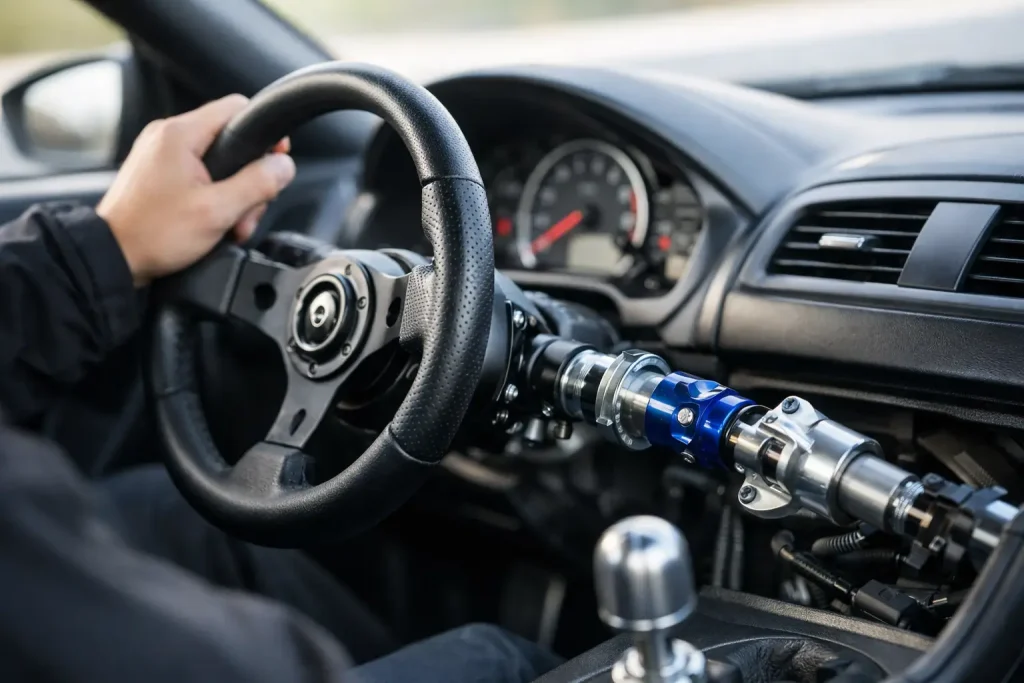
Electric power steering, often referred to as EPS or EPAS, is a common choice for suitable classic and specialist vehicles. Assistance is provided by an electric motor, typically mounted within the column arrangement or integrated into a rack, rather than by an engine-driven hydraulic system.
The main attraction is adjustable low-speed assistance without the packaging demands of a conventional hydraulic arrangement. A properly selected system can make manoeuvring, touring and urban driving far easier. It may also reduce the need to alter the engine bay of a vehicle undergoing restoration.
The engineering detail is critical. The motor, controller, torque sensing, column design and mounting arrangement must be appropriate for the vehicle. A conversion that is too heavily assisted can leave the steering vague around the straight-ahead position. One with poor mounting geometry or unsuitable joints can introduce roughness, excess play or safety concerns.
Where an electronic unit is fitted, correct configuration is equally important. Some systems require vehicle-specific coding, flashing or calibration before they operate as intended. The steering angle sensor may also need resetting after alignment or component replacement. This is not a universal job: the requirements depend on the make, model and chosen system.
Reconditioning an existing rack or steering box
Where a vehicle was originally designed with power assistance, restoring the original equipment to proper condition is often the most appropriate way to achieve lighter steering. A tired rack, steering box or column assembly may still function, but internal wear, contamination or corrosion can create stiffness, uneven assistance or poor self-centring.
Component-level reconditioning can be a sensible option for suitable units. It allows the assembly to be assessed and rebuilt with appropriate OE or OE-quality internal parts where available, rather than assuming that a complete replacement is the only answer. The finished unit should be tested before it leaves the workshop.
This route retains the vehicle’s intended steering ratio, mounting points and designed level of assistance. It is especially valuable for Right Hand Drive applications, classic vehicles and specialist models where a correct replacement unit can be difficult to source. Not every rack, box or EPS unit is economically repairable, and severe casing damage, unavailable parts or electronic failure may make replacement the better option.
Steering ratio and rack changes
A quicker rack reduces the amount of steering-wheel movement needed to turn the road wheels. It can make a vehicle feel more responsive, but it does not automatically make steering lighter. In fact, a faster ratio can increase the effort felt at the wheel, particularly without sufficient assistance.
Conversely, a slower ratio may reduce effort in some circumstances but requires more turns from lock to lock. For road cars, a change in ratio should be chosen for the way the vehicle is actually used, not just for a headline figure. The rack must also be compatible with the vehicle’s track rods, mounting position, suspension travel and steering arm geometry.
For most owners looking for easier parking and low-speed use, correcting the assistance system or fitting a properly engineered EPS conversion is more effective than changing rack ratio alone.
Tyres, wheels and alignment still influence effort
Steering assistance cannot fully compensate for an unsuitable chassis set-up. Wider tyres, aggressive tread patterns, incorrect offsets and very large wheels can all make the steering feel heavier at low speed. This does not mean those choices are always wrong, but they should be considered when planning a conversion or investigating a complaint.
Wheel alignment has a direct effect on steering weight and returnability. Caster, camber and toe settings influence how the steering loads up, self-centres and responds to road irregularities. Settings that suit circuit use may not provide the relaxed parking and motorway behaviour wanted from a road car. A vehicle should be aligned to the correct specification, or to a considered specialist set-up where suspension changes have been made.
A steering rack must be centred before alignment, with the steering wheel positioned correctly and the steering angle sensor addressed where applicable. Skipping this stage can leave the car driving straight with an off-centre wheel, limited lock in one direction or warning lights on certain modern systems.
Retaining feel matters as much as reducing effort
Very light steering is not always better steering. At motorway speed, drivers still need a stable on-centre feel and useful feedback through bends. Excessive assistance can make the car feel nervous, while inconsistent assistance may encourage unnecessary steering corrections.
The preferred result is proportionate assistance: light enough for manoeuvring, progressive through the turn and composed at speed. This is why a conversion or reconditioned unit should be judged on road behaviour as well as whether the steering wheel is easier to turn in the workshop.
For performance cars, the balance is even more sensitive. The aim may be to reduce parking effort while preserving the precision that makes the car enjoyable. For classics, preserving original steering character may matter more than achieving the lightest possible setting. Fleet and commercial applications, meanwhile, may prioritise reduced driver fatigue and dependable daily operation.
Fitting, safety and post-installation checks
Steering components are safety-critical. Modifications should be specified and installed by people who understand the loads passing through the column, rack mounts, joints and subframe. The work may involve fabrication, electrical integration, coding, wheel alignment and careful inspection of related parts, so it is rarely a simple bolt-on exercise.
After fitting, the vehicle needs practical checks for full steering travel, tyre and component clearance, secure mounting, correct self-centring and consistent assistance. On applicable EPS vehicles, coding and calibration should be completed using the correct process. Any warning messages, uneven assistance or abnormal noise should be investigated before the vehicle returns to normal use.
Insurance disclosure may be required for a steering conversion or other material modification. Owners should also consider the vehicle’s MOT requirements and, for substantially altered classics, any wider registration or engineering implications. A professional installer can explain the technical scope of the work, but the owner remains responsible for notifying relevant insurers and authorities where required.
Choosing the correct route for your vehicle
A useful assessment starts with how the vehicle behaves now, what has changed, and what you want it to do better. A modern car with suddenly heavy steering needs diagnosis. A classic used for weekend touring may suit electric assistance. A restored vehicle with an original power steering system may benefit most from reconditioning the correct components and setting the alignment properly.
Pro Power Steering assesses suitable racks, steering boxes, columns and EPS systems at component level, with repair, reconditioning, supply and fitting options where appropriate. For electronic applications, technical support with coding and calibration can be as important as the mechanical work itself. Completed applicable work is supported by a 12-month warranty under the relevant terms.
The worthwhile modification is the one that makes the car easier to place and park without disguising faults or dulling the control that gives the vehicle confidence on the road.
