
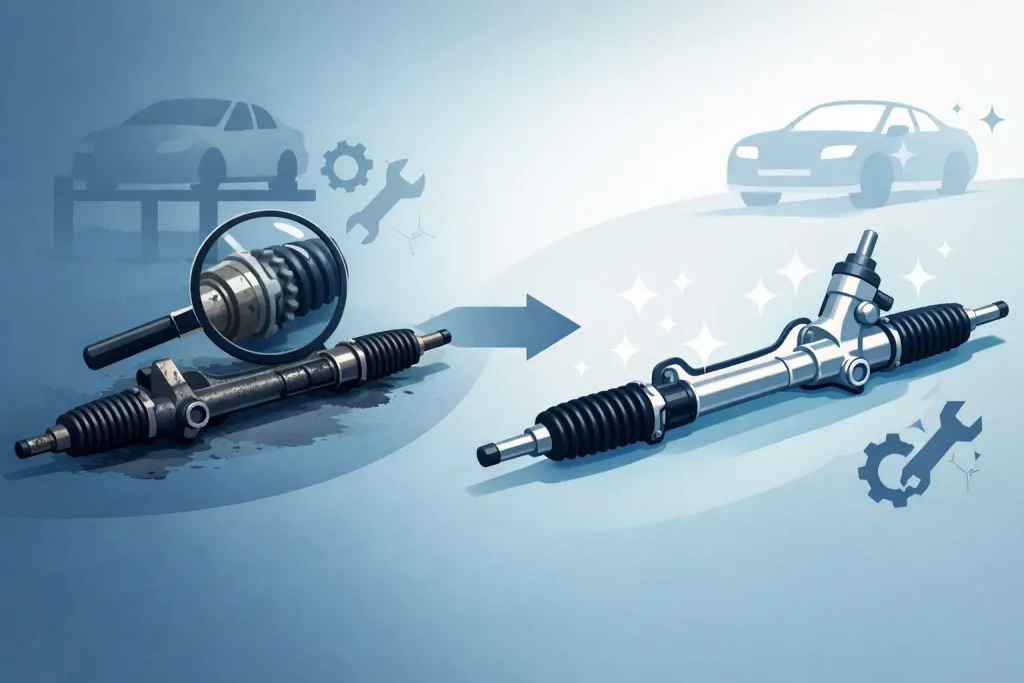
A steering wheel that feels heavy, vague or reluctant to self-centre can turn every journey into hard work. Steering rack reconditioning is often the sensible answer when the rack itself is worn, leaking or suffering from an internal fault, particularly where a new manufacturer unit carries a substantial price tag. Done properly, it restores the component to smooth, accurate operation rather than simply masking a symptom.
For drivers, workshops and fleet operators, the key is identifying whether the rack is genuinely at fault before ordering parts. A steering problem can originate elsewhere in the system or suspension, and fitting a replacement rack without correct diagnostics can leave the original issue unresolved.
What steering rack reconditioning involves
The steering rack converts the rotation of the steering wheel into the precise side-to-side movement that turns the road wheels. In a hydraulic system, assistance reduces effort through fluid pressure. In an electric power steering, or EPS, system, an electric motor and control electronics provide assistance. Manual racks have no assistance but still rely on accurate internal adjustment and sound mechanical condition.
Reconditioning is not a quick clean-up job. A specialist process starts with a full assessment of the unit, followed by strip-down and inspection of its internal components. The rack bar, pinion, bearings, seals, bushes, housings and adjustment parts must be checked for wear, corrosion, scoring and damage. Components that do not meet specification are replaced, while serviceable parts are cleaned and prepared for reassembly.
The rebuilt rack is assembled with the correct seals, internal settings and lubrication for its design. It should then be tested for smooth travel, correct operation and leaks where applicable. On electrically assisted units, diagnostics may also be required to establish whether the fault lies in the rack mechanism, motor, torque sensor, control module or associated wiring.
This distinction matters. A visible fluid leak may suggest a seal failure, but corrosion on the rack bar can soon damage replacement seals if the bar is not suitable for reuse. Equally, an EPS warning light does not automatically mean the complete rack needs replacement. Proper steering diagnostics prevent unnecessary expense.
Signs your steering rack needs attention
The most obvious warning is a change in steering feel. Heavy steering, intermittent assistance, excessive free play or a noticeable knock through the steering wheel all deserve investigation. A vehicle that wanders, pulls unpredictably or feels slow to respond to steering inputs may also have a rack-related issue, although wheel alignment, tyres and suspension joints need checking too.
On hydraulic racks, leaking fluid around the gaiters or from the rack body is a common concern. Fluid inside a gaiter can indicate an internal seal failure, but the source must be confirmed rather than assumed. On EPS systems, assistance may become uneven, fail at certain times or trigger a dashboard warning. Some faults are stored electronically and can only be assessed accurately with suitable diagnostic equipment.
A clunk when changing direction can arise from internal rack wear, worn mounting points, track rod joints or suspension components. That is why a specialist inspection is more useful than replacing parts on the basis of one symptom. The goal is to identify the cause of the movement and restore the steering system as a whole to safe working condition.
Why diagnosis comes before repair
Steering is a safety-critical system, and accurate diagnosis should always guide the repair route. A technician will assess the vehicle on the ground and, where required, with the front wheels raised. They will check for movement at the rack, inner joints and outer steering connections, inspect gaiters and mountings, and assess the steering wheel response.
For modern vehicles, the electronic side of the system is equally relevant. Fault codes, live data and calibration status can provide useful evidence, especially on premium marques with vehicle-specific EPS designs. A steering angle sensor fault, low system voltage or a communication issue can produce symptoms that resemble a failed rack.
It also matters whether the vehicle is right-hand drive. RHD steering racks can differ in layout, input position, fitment and calibration from their left-hand-drive equivalents. A specialist should identify the unit precisely by vehicle application and part number, rather than relying only on a broad model description. This is particularly important for imported parts, classics and performance vehicles with variant-specific steering systems.
Is steering rack reconditioning the right choice?
Reconditioning is often a strong alternative to buying a new rack, but it depends on the condition of the original component and the availability of suitable parts. For a rack with worn seals, bushes or bearings, a professionally reconditioned unit can provide reliable service at a more manageable cost than a main-dealer replacement. It also retains the correct vehicle-specific housing and geometry where the original unit is rebuildable.
However, not every rack can be economically restored. Severe corrosion, a badly damaged housing, extensive internal scoring or a failed electronic section without viable repair options may make replacement the more practical route. The right decision is based on inspection, not on a blanket preference for either repair or replacement.
There is also a difference between a correctly reconditioned steering rack and a used unit of unknown history. A second-hand rack may be cheaper at the point of purchase, but its seals, internal wear and electrical condition are largely unverified. A reconditioned unit has been assessed, rebuilt and tested, giving workshops and vehicle owners a clearer basis for confidence.
Fitting and setting up the reconditioned rack
The quality of installation affects the result as much as the quality of the rack itself. The steering wheel must be centred, the rack correctly positioned and all steering connections tightened to the manufacturer’s specification. If the steering column coupling is fitted incorrectly, the vehicle can leave the workshop with an off-centre wheel or restricted steering movement.
Wheel alignment should be checked after rack replacement or removal. Adjusting track rod lengths during installation changes toe settings, and incorrect toe can cause poor handling and rapid tyre wear. A proper alignment check helps ensure the vehicle tracks straight and the steering wheel sits correctly when driving ahead.
Some EPS-equipped vehicles require calibration or coding after work has been completed. Depending on the application, this can include steering angle sensor calibration, end-stop learning or clearing fault codes once the repair has been verified. Skipping this stage can leave warning lights present or prevent the system from operating as intended.
Choosing a steering specialist
A general repair garage may correctly identify many steering faults, but rack reconditioning requires component-level experience and equipment. Look for a provider that can diagnose the issue, confirm the exact rack specification, explain whether repair is viable and test the finished unit before return or fitting.
For workshops, clear communication is particularly valuable. The supplier should establish the vehicle details, fault symptoms and part number where available, then advise on any fitting requirements. For owners, the important questions are straightforward: what has failed, what work will be carried out, what must be checked during installation and what warranty protection applies?
Pro Power Steering provides specialist support for RHD manual, hydraulic and electric steering systems, with reconditioning, diagnostics and supply-and-fit options backed by a 12-month guarantee on completed work. That specialist approach is useful where the rack is expensive, unusual or fitted to a vehicle that deserves a more considered repair than a like-for-like parts swap.
A steering rack should not be ignored simply because the vehicle remains driveable. Early assessment can prevent a minor leak, intermittent fault or developing free play from becoming a larger repair and, more importantly, helps return the vehicle to the smooth, precise steering it was designed to deliver.
