
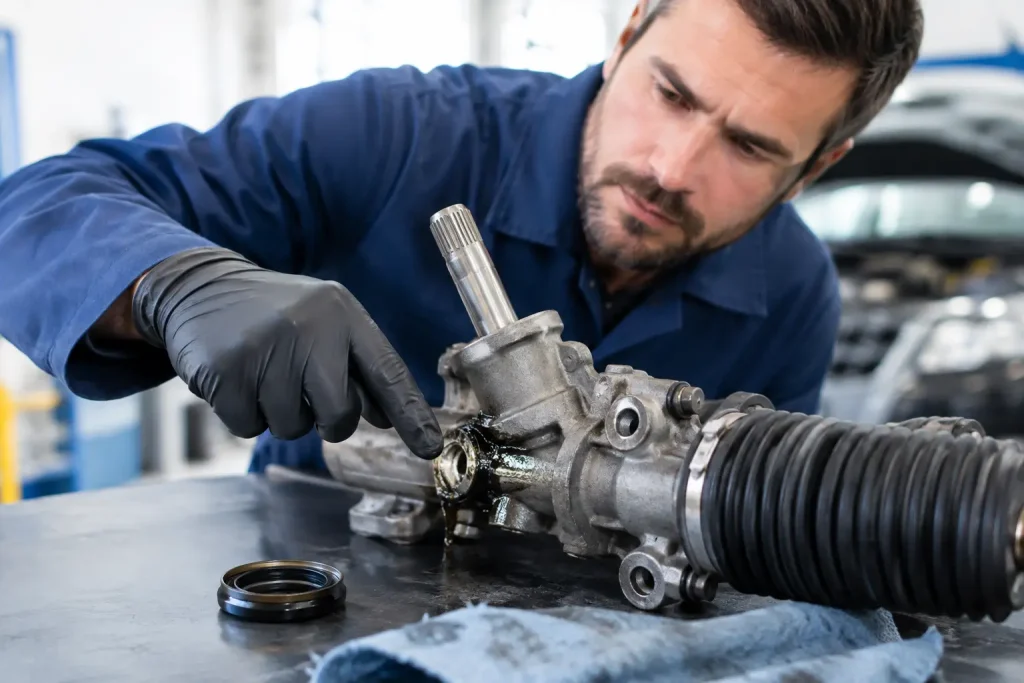
A steering box can develop a leak gradually enough that it is first mistaken for ordinary oil residue, particularly on older cars, 4x4s, classics and commercial vehicles. This steering box seal failure guide explains what a genuine seal failure looks like, why it matters to steering control, and how a specialist diagnosis identifies the right repair route before fluid loss becomes a wider fault.
Steering boxes remain common on many classic vehicles, larger 4x4s, vans and specialist applications. Unlike a modern rack-and-pinion assembly, a steering box converts steering-wheel movement through internal gears and shafts before transmitting it to the linkage. It is a durable arrangement, but its seals, bearings, shafts and internal surfaces still wear with age, mileage and use.
What steering box seal failure means
A steering box relies on several seals to retain lubricant or hydraulic fluid while allowing its input shaft, sector shaft and other internal components to move. On hydraulic power-assisted systems, fluid is under pressure during operation. A damaged or hardened seal can therefore allow fluid to escape externally, or in some cases allow internal wear to affect how the box operates.
The visible leak is not always the whole problem. A seal may have failed because the shaft it runs on is scored, pitted or worn. Excessive bearing movement can also prevent a new seal from maintaining a reliable contact surface. Simply fitting a seal without assessing the condition behind it may stop a leak briefly, but it does not necessarily provide a lasting repair.
Manual steering boxes use lubricant rather than hydraulic fluid, but the same principle applies. Loss of lubricant can accelerate wear within the gears and bearings, while oil contamination on surrounding components makes it harder to assess the true source of the fault.
Common signs of a failing steering box seal
Fresh fluid around the steering box housing is the most obvious sign, but location matters. Fluid may track along the housing, collect around the drop arm area or appear lower down after running from a different component. The oil type, colour and smell can help a technician distinguish steering fluid from engine oil, gearbox oil or a leak elsewhere in the vehicle.
On a hydraulic system, a falling reservoir level is a useful warning. Drivers may also notice heavier steering, intermittent assistance, a groan when turning at low speed or aerated fluid in the reservoir. These symptoms do not prove the steering box itself is at fault, as other parts of the power-steering system can produce similar behaviour. They do, however, justify prompt inspection.
A sector-shaft seal leak often presents around the lower output area of the box, where the drop arm is fitted. Input-shaft leaks may be found at the upper end of the box near the steering column connection. A leak from a cover, adjuster or housing joint can look similar from underneath, which is why cleaning and tracing the area is more reliable than judging the fault from a single photograph.
There may also be steering symptoms that are separate from fluid loss but relevant to the repair decision. These include excessive free play at the steering wheel, a vague straight-ahead feel, tight spots through a turn, poor self-centring or a knock transmitted through the steering linkage. A leak alone does not automatically mean the box is worn internally, but a complete assessment should establish whether these issues are connected.
Why seals fail in the first place
Age is a frequent cause. Rubber sealing materials harden over time, particularly where a vehicle has spent long periods unused or has been exposed to heat cycles. On restoration vehicles, a box may begin leaking shortly after returning to regular use because old seals are being asked to move and hold fluid pressure again.
Corrosion is another common contributor, especially on vehicles used through UK winters. Moisture can damage the polished surface of an exposed shaft. Each movement across that roughened surface then works against the seal lip. A seal replacement is only appropriate if the shaft surface can be restored or is still within a condition suitable for reliable sealing.
Wear inside the steering box also changes the picture. Bearings, bushes and gears can develop clearance, allowing a shaft to move more than intended. Incorrect adjustment may mask play temporarily but can create tightness or accelerate internal wear. A steering box is not simply tightened until the steering feels firmer: adjustment must be made with an understanding of the box design and the condition of its internal parts.
Contaminated or incorrect fluid can contribute to deterioration on hydraulic systems. Equally, a vehicle that has been driven with a low fluid level may suffer issues beyond the original leak. The practical lesson is to investigate fluid loss early rather than repeatedly topping up and hoping it remains stable.
Diagnosing a steering box leak correctly
A proper steering-box inspection starts by confirming the leak source. The exterior of the box and nearby components should be cleaned, then examined after the vehicle has been operated. On hydraulic systems, checking fluid level and condition is part of the process. Steering effort, free play, response and noise should be assessed alongside the leak rather than treated as unrelated observations.
The wider steering system also needs attention. Worn linkage joints, steering-column couplings, suspension components and incorrect wheel alignment can all affect how a vehicle feels on the road. They do not cause every seal leak, but they can complicate the diagnosis and leave the driver disappointed if only one fault is addressed.
For a removed unit, meaningful assessment goes further. A steering specialist can inspect shaft condition, internal wear, housing integrity and adjustment mechanisms, then determine whether component-level reconditioning is viable. Suitable units can be rebuilt with appropriate OE or OE-quality sealing components, worn serviceable parts addressed where necessary, and the completed unit tested before it leaves the workshop.
This approach is particularly valuable where a new Right Hand Drive steering box is costly, unavailable or subject to long supply times. It is not a guarantee that every box can be saved. Severe corrosion, damaged castings, unavailable hard parts or extensive internal wear may make replacement the more sensible and safer option.
Seal replacement, reconditioning or replacement?
The right repair depends on the cause of the failure, not just the visible symptom. If inspection confirms that the box is sound internally and the relevant sealing surface is in good condition, a targeted repair may be appropriate. This is usually the least invasive option, but it must not be chosen merely because it appears cheaper at the outset.
Where there is shaft wear, free play, rough operation or evidence of internal deterioration, reconditioning is often the better long-term route. The unit is stripped, cleaned and assessed, with seals and other worn components renewed as required. It provides an opportunity to address the condition that caused the seal to fail rather than treating the seal as an isolated consumable.
Replacement may be required if a unit is beyond economical repair or if a correctly specified reconditioned exchange unit is available sooner. Vehicle-specific details are critical: steering-box ratios, mounting arrangements, input splines, output shaft configuration and Right Hand Drive compatibility can differ even between closely related models. Supplying the wrong unit can create fitting delays and compromise steering geometry.
After refitting, the system may need fluid filled to the manufacturer specification, air removed correctly and the steering linkage checked. Wheel alignment should be inspected whenever steering components or linkage settings have been disturbed. On vehicles with electronic steering-angle functions or stability systems, calibration procedures may also be necessary following related steering or alignment work.
When the vehicle should not be driven
A light seep with no change in fluid level may allow time to arrange an inspection, but it should still be monitored closely. Active drips, a rapidly falling fluid level, heavy steering, sudden changes in steering response or fluid reaching tyres, brakes or hot exhaust components require more urgent action.
Do not assume that adding fluid makes the vehicle safe to use. If power assistance is lost, steering may remain mechanically connected but become substantially heavier, especially at low speed. Continued use can also turn a repairable steering-box issue into damage affecting other components.
For owners and workshops, accurate information speeds up the process. The vehicle registration, make, model, year, engine, steering-box part number where available, photographs of the leak area and a clear description of steering symptoms all help identify the correct next step. Pro Power Steering can assess suitable steering boxes for component-level reconditioning and provide direct technical support where the diagnosis or application needs specialist input.
A steering-box leak deserves attention because the steering system has no room for guesswork. Establish the source, assess the box as a complete unit and choose the repair that returns the vehicle to smooth, precise and dependable steering rather than simply hiding the evidence of fluid loss.
