
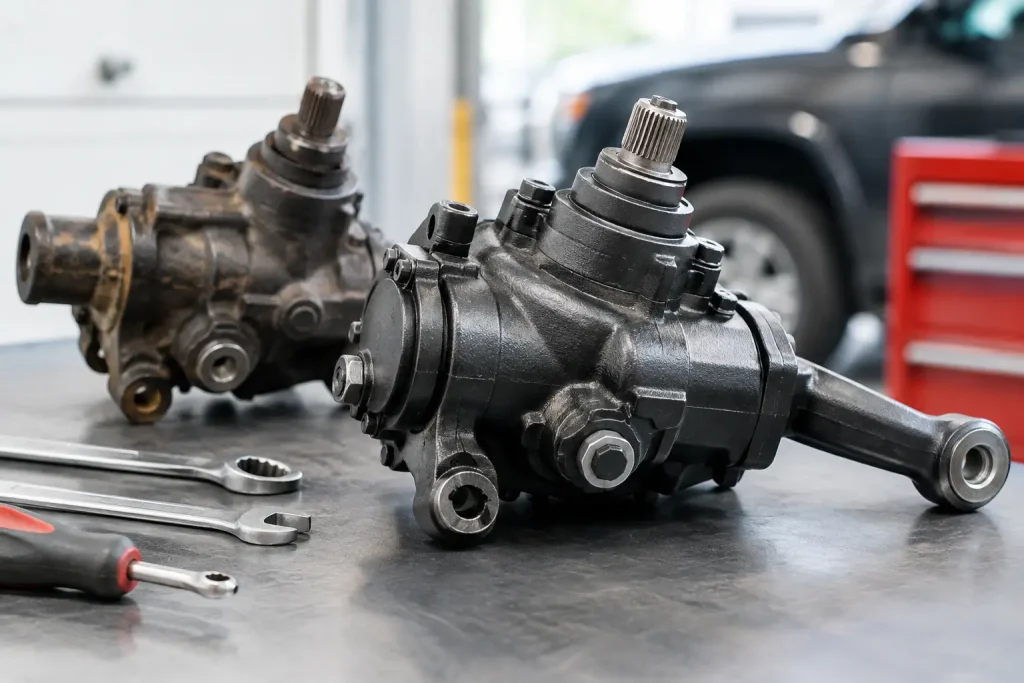
A vehicle that wanders, feels vague around the straight-ahead position or needs constant small steering corrections may have wear in the steering linkage, suspension or tyres. On vehicles fitted with steering boxes, however, the box itself is a key suspect. Although most modern cars use steering racks, steering boxes remain common on many classics, older 4x4s, commercial vehicles and specialist applications. Correct diagnosis matters because a worn steering box can affect precision, driver confidence and safety.
What steering boxes do
A steering box converts the rotation of the steering wheel into movement that turns the road wheels. Rather than moving a rack bar from side to side, as a steering rack does, a box generally uses a worm-and-sector, worm-and-roller or recirculating-ball mechanism. Its output shaft operates a drop arm, which then moves the steering linkage.
This layout suits heavier vehicles and older designs where packaging, durability and leverage were prioritised. A properly operating steering box should deliver predictable response and controlled self-centring, even if it does not have the immediate feel of a well-set-up rack-and-pinion system.
Many boxes use hydraulic assistance to reduce steering effort. That assistance can mask developing mechanical wear for a time. A driver may first notice that the steering feels loose or imprecise rather than especially heavy. Once wear progresses, the vehicle may need more frequent correction, particularly on uneven roads or at motorway speed.
Steering boxes and steering racks are not interchangeable terms
The terms are sometimes used loosely, but they describe different assemblies. A steering rack has a pinion gear that moves a rack bar directly, with inner joints connecting to the track rods. Rack-mounted electric power steering, hydraulic steering racks and manual racks each have distinct fault patterns and repair processes.
A steering box transfers movement through a steering arm and external linkage. Its adjustment, internal components and mounting arrangement are different. The distinction is especially relevant when sourcing parts or arranging diagnostics. A garage investigating play in a rack will check different areas from those assessed on a recirculating-ball steering box.
For vehicle owners, the practical question is not which design is better in isolation. It is which assembly is fitted to the vehicle, where the free play originates and whether the original unit can be reconditioned safely. On older and specialist vehicles, retaining the correct box can be preferable to fitting an unsuitable substitute, provided the housing and major internal components are serviceable.
Common steering box faults
Excessive free play is the fault most often associated with steering boxes. Some free movement may be characteristic of an older design, but a noticeable delay between turning the steering wheel and the road wheels responding requires investigation. Internal wear in the worm, sector shaft, bearings or bushes can contribute, as can wear in the drop arm, ball joints and linkages outside the box.
Oil leakage is another frequent issue on hydraulic units. Leaks may develop at the input shaft, sector shaft or cover seals. Low fluid level can increase steering effort and may lead to noise or inconsistent assistance, but topping up fluid does not address the underlying cause. The source of the leak needs to be identified before deciding whether repair is viable.
Other symptoms include a tight spot through the steering travel, poor return towards centre, knocking, uneven assistance or a steering wheel that feels reluctant to move despite correctly inflated tyres. These symptoms do not automatically condemn the box. Binding linkages, damaged mountings, suspension faults and geometry problems can produce similar complaints.
Adjustment is particularly misunderstood. Some steering boxes have an external adjuster, but it is not a universal cure for looseness. Over-adjusting a worn box can create binding around the centre position, accelerate component wear and impair self-centring. A specialist assessment should establish whether the apparent play is adjustable within specification or the result of internal parts that need reconditioning.
Diagnosis before repair or replacement
A useful steering box diagnosis starts with the vehicle securely inspected and the steering moved through its range. The technician will assess steering-wheel free play, movement at the drop arm, condition of the external joints, mounting security and any sign of fluid loss. They should also establish whether the fault occurs only with the engine running, only when warm or at a particular point in the steering travel.
The vehicle’s history is valuable. A classic that has gradually developed vague steering may have cumulative wear across several components. A 4×4 with a sudden change after off-road use or an impact may have a damaged linkage, mounting issue or internal fault. On a right-hand-drive vehicle, component specification and routing can differ from an equivalent left-hand-drive model, so a visually similar unit should not be assumed to be correct.
Where removal is required, the condition of the fluid, seals, shaft surfaces and internal mechanism can determine the next step. A box with a sound casing and recoverable internal wear may be suitable for reconditioning. Severe corrosion, cracked housings, damaged gears or unavailable critical parts can make replacement the more sensible option.
When steering box reconditioning makes sense
Reconditioning is often appropriate where an original steering box is difficult to source, particularly for classic, specialist and discontinued vehicles. The process is more than fitting seals. It can involve dismantling, cleaning, inspecting the worm and sector components, replacing serviceable wear items, addressing seal-related leaks and setting the unit correctly before testing.
The exact scope depends on the design and the fault found. A hydraulic box may need mechanical work as well as seal replacement. A manual box may require bearing, bush or gear-related attention. It is not responsible to promise that every steering box can be repaired: successful reconditioning depends on the availability and condition of the core components.
Replacement can be the right route where repair is not technically sound or where a correctly specified exchange unit is available. The replacement must match the vehicle’s application, steering ratio, input arrangement, drop-arm fitment and right- or left-hand-drive configuration. Getting one of these details wrong can create poor steering geometry, limited travel or an unsafe installation.
For trade customers and restoration workshops, clear fault information helps avoid unnecessary delays. Supplying the vehicle registration, chassis details where appropriate, box identification markings, photographs and a description of the symptoms can help confirm the correct route. Pro Power Steering can advise on suitable steering-box assessment alongside its core rack repair and reconditioning work.
Fitting considerations after a steering box repair
A repaired or replacement box must be fitted with the surrounding steering components in mind. Worn linkage joints, damaged mountings or an incorrectly positioned steering wheel can make a sound unit appear faulty. Hydraulic systems also need the correct fluid and proper bleeding procedure specified for the vehicle.
Once installed, the steering should move smoothly from lock to lock without tightness, noise or interference. Steering-wheel centre, road-wheel position and alignment should then be checked. Alignment alone cannot repair internal box wear, but it remains necessary after work that affects steering linkage position or front-end geometry.
Modern steering racks may require diagnostic coding, calibration or angle-sensor procedures after replacement. Traditional steering boxes normally do not involve electronic programming, which is one reason they are often mechanically repairable for longer. That said, a vehicle can still have electronic stability or steering-angle systems that need attention after related work, so the vehicle specification should always guide the final checks.
Knowing when the fault is actually in a steering rack
Many later cars, including premium saloons, SUVs and performance vehicles, use a rack rather than a box. Heavy steering, fluid loss, knocking or poor response on these vehicles may point to a hydraulic or electric power steering rack, not a steering box. Rack-mounted EPS faults can involve the motor, ECU, torque sensing, wiring, coding or calibration, alongside mechanical wear.
Identifying the assembly before ordering parts prevents wasted time and incorrect repairs. The right repair path begins with the actual steering design, the symptom and a proper inspection – not a generic assumption based on how the steering feels.
If the steering has become vague, heavy, noisy or inconsistent, treat it as a diagnostic issue rather than something to adjust away. A correctly assessed steering box or steering rack gives the vehicle the precise, predictable response it was designed to deliver.
