
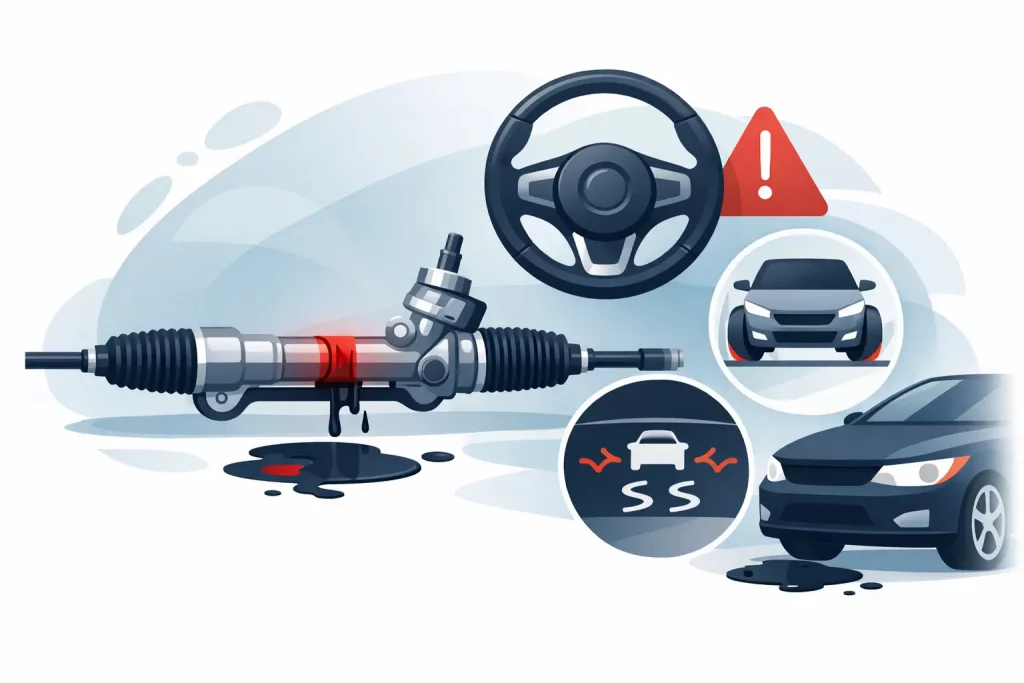
A small patch of red, amber or brown fluid beneath the front of a vehicle can be easy to dismiss, particularly if the steering still feels normal. However, leaking steering rack symptoms often develop gradually, and the first visible trace may be the warning that seals inside the rack are no longer containing hydraulic fluid correctly.
For a hydraulic power steering system, a leak is not simply a cleanliness issue. As fluid level falls, steering assistance and rack lubrication can be affected. Left unresolved, a repair that may initially be limited to the rack’s seals or internal components can become a more extensive steering-system fault. Early specialist diagnostics give the best chance of restoring smooth, accurate steering without unnecessary replacement of parts.
What a steering rack leak looks like
A hydraulic steering rack uses pressurised fluid to assist steering effort. The rack itself is protected by rubber gaiters at either end, where the inner track rods connect. These gaiters should normally be dry internally. If fluid collects inside one, or runs from its edge, it commonly indicates that an internal rack seal has failed.
Fluid may also be seen on the rack housing, subframe, undertray or driveway. Its exact location matters. A wet area around the steering rack does not automatically prove the rack is at fault, because fluid can travel along components before it drips. Equally, a split gaiter may allow water and road contamination into the rack, causing corrosion on the rack bar and eventually damaging the seals.
The colour of the fluid can provide a clue, but it is not a diagnosis on its own. Fresh fluid may be red, green or amber depending on the vehicle specification, while aged fluid often becomes darker. A technician should identify the source before recommending repair work.
Leaking steering rack symptoms to watch for
Fluid loss is the most obvious sign, but it is rarely the only one. The steering may become heavier at low speed, especially when manoeuvring into a parking space or turning at a junction. Assistance can feel inconsistent, with the wheel light one moment and noticeably weighted the next.
You may also notice a vague or unsettled feeling through the steering wheel. This does not always mean the rack is leaking, as worn suspension joints, track rod ends, tyres and wheel alignment can produce similar complaints. But when imprecise steering appears alongside fluid around the rack or a falling reservoir level, the rack needs proper inspection.
Other symptoms include:
- Repeated need to top up the specified steering fluid
- Wetness or fluid dripping from a steering-rack gaiter
- A heavier steering feel after longer journeys or during slow manoeuvres
- Uneven assistance from lock to lock
- A groan, whine or chatter while turning the steering wheel
- Visible corrosion, damage or deterioration around the rack and gaiters
A vehicle may still be driveable in the early stages, but that is not a reason to postpone inspection. A leak can worsen quickly once a seal has begun to fail, particularly where the rack bar is corroded or pitted. Running a hydraulic system with insufficient fluid can also lead to poor steering assistance and accelerated wear elsewhere in the system.
A wet gaiter is a significant clue
A steering-rack gaiter is designed to keep dirt and water away from the moving rack bar. It should not contain hydraulic fluid. During inspection, a specialist may carefully release or remove the gaiter to check for internal fluid contamination. If fluid is present, the usual cause is a failed inner seal within the rack.
Replacing the gaiter alone will not cure this type of leak. It may make the exterior look tidy for a short period, but the failed seal remains inside the rack. The correct repair depends on the rack’s condition, including the state of the rack bar, pinion, bearings, seals and housing.
Why steering racks start leaking
Age and mileage are common factors, but neither tells the whole story. Internal seals harden with time and repeated heat cycles. Road salt, standing water and a damaged gaiter can corrode the polished rack bar. When that corroded section passes through a seal, it can damage the sealing surface and allow fluid to escape.
Poor-quality fluid, contamination or previous incorrect repairs can also contribute. In some cases, a vehicle has been driven for months with a torn gaiter before the steering begins to feel different. By then, moisture and grit may already have affected the rack internally.
UK road conditions are particularly hard on underbody components. Potholes, kerb strikes and rough surfaces do not normally create an internal seal leak by themselves, but they can damage a gaiter, bend associated steering components or expose an existing weakness. Vehicles that cover high urban mileage, commercial vehicles and cherished classics stored for long periods can each present different failure patterns.
Hydraulic racks and electric steering are not the same
Not every modern vehicle has a hydraulic steering rack. Many cars use electric power steering, either with a motor mounted to the column or integrated with the rack. An electric rack does not use hydraulic steering fluid, so it cannot develop a hydraulic fluid leak in the same way.
That distinction prevents misdiagnosis. If an electric rack appears wet, the source may be water ingress, grease from a damaged gaiter, engine oil, transmission fluid or another vehicle fluid. Electric systems can still suffer from stiffness, warning lights, intermittent assistance and steering play, but they require electronic and mechanical diagnostics rather than assumptions based on a fluid leak.
For this reason, the vehicle’s steering type should be confirmed before any repair decision is made. This is especially relevant across premium marques, where rack designs and diagnostic procedures vary substantially by model and year.
How a specialist diagnoses the fault
A reliable diagnosis begins with a visual inspection of the rack, gaiters, track rods, mounting points and surrounding area. The technician will assess the fluid condition and level where applicable, identify whether the fluid is genuinely steering fluid, and trace the source rather than relying on the point where it has dripped.
The rack is then checked for excessive free play, roughness, tight spots and inconsistent operation across its travel. The condition of the gaiters is assessed carefully, as are signs of corrosion on exposed components. Wheel alignment should also be considered once steering work is complete, because a vehicle cannot deliver precise handling if the geometry is incorrect.
This methodical approach matters because replacing a complete rack without identifying the true fault can be expensive and unnecessary. Conversely, simply stopping an external drip without checking internal wear can leave the underlying problem unresolved.
Repair, reconditioning or replacement?
The best option depends on the rack’s internal condition and the availability of suitable components. A steering rack with serviceable hard parts may be a strong candidate for professional reconditioning. This involves dismantling, cleaning and inspecting the unit, replacing worn seals and relevant internal components, restoring surfaces where appropriate, and testing the completed rack before refitting.
Reconditioning is often a cost-effective alternative to a new dealer-supplied unit, particularly for vehicles where new components are costly or difficult to source. It is not a shortcut. A proper reconditioned rack must meet the correct operating standard, not merely be cleaned and fitted with a basic seal kit.
Replacement can be the sensible route where the housing is damaged, corrosion is severe or the rack cannot be restored reliably. The key is a vehicle-specific assessment. Correct rack specification, right-hand-drive configuration and matching electronic or hydraulic design all matter. A part that physically fits is not necessarily the correct part for the vehicle.
Can you keep driving with a leaking rack?
It depends on the severity of the leak and how the steering feels, but it should be treated as a prompt for inspection rather than a fault to monitor indefinitely. Do not continue driving if steering assistance drops significantly, the wheel becomes difficult to turn, the steering binds, or a warning message appears. These symptoms can affect vehicle control, particularly at low speeds and during emergency manoeuvres.
If the leak is minor and the vehicle remains controllable, arrange steering diagnostics as soon as practical. Avoid repeated lock-to-lock manoeuvres and do not rely on topping up fluid as a long-term solution. That only masks the loss while the rack continues to deteriorate.
A specialist steering repairer can determine whether the answer is a targeted repair, a fully reconditioned rack or a replacement unit, then ensure the vehicle is set up for smooth, precise steering afterwards. Addressing the first signs early is usually the most economical way to protect both the steering system and the confidence you should feel behind the wheel.
