
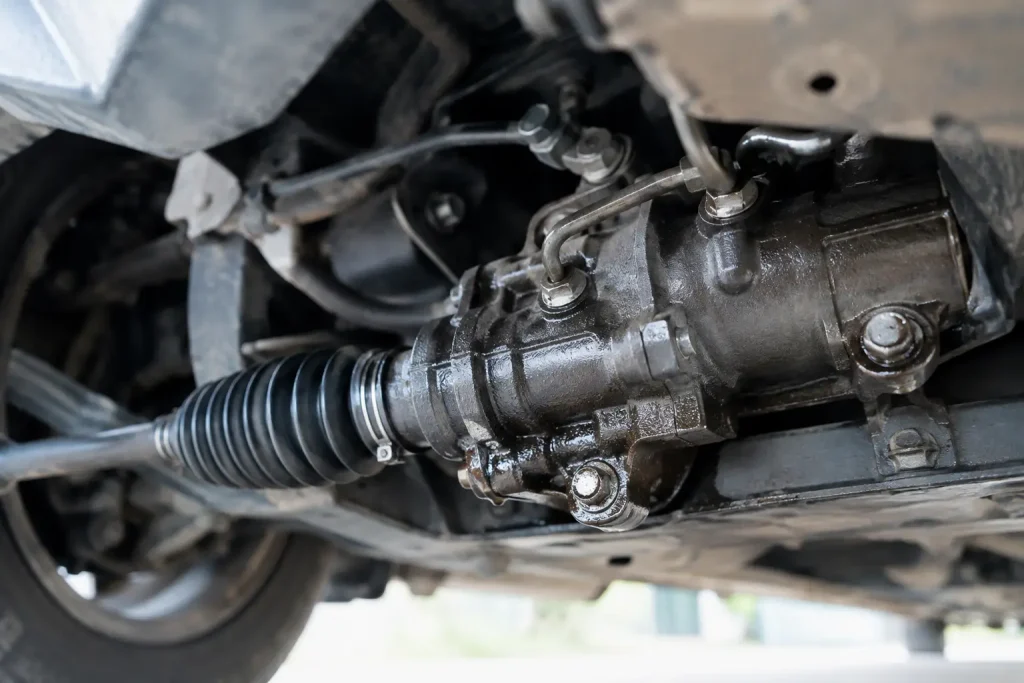
A hydraulic steering box can appear dry for months, then leave a red or amber patch beneath the front of the vehicle after a journey. So, can steering boxes leak? Yes. Ageing seals, shaft wear, corrosion and internal pressure can all allow power steering fluid to escape. The key is establishing whether the fluid is genuinely coming from the steering box, how far the fault has progressed, and whether component-level reconditioning is a suitable option.
Steering fluid loss should not be treated as a cosmetic issue. A leak can reduce hydraulic assistance, contaminate surrounding components and eventually leave the vehicle with heavy, inconsistent steering. On older cars, classic vehicles, 4x4s and certain commercial applications, a properly diagnosed steering box repair can be a more appropriate route than replacing the entire assembly.
Can steering boxes leak from more than one place?
They can. A steering box is a hydraulic mechanical assembly that converts the steering wheel’s rotary movement into the motion needed to turn the road wheels. Unlike the rack-and-pinion arrangement found on many modern cars, a steering box commonly uses a worm-and-sector or recirculating-ball mechanism. It contains pressurised fluid and several sealing points, any of which may deteriorate over time.
The most visible leaks often occur around the input shaft, where the steering column connects to the box, or around the output or sector shaft that operates the steering linkage. Fluid may also escape through the top cover, end cover or casing joints. In some cases, fluid is seen around the box but has travelled from another part of the system, so the apparent source is misleading.
That distinction matters. Replacing seals in a box that is not the actual source of the leak will not solve the problem. Equally, fitting external seals alone may offer only a short-term improvement if the shaft surface is pitted or worn, or if the internal bushes and bearings allow excessive movement.
What causes a steering box to leak?
Time is the usual starting point. Rubber seals harden, lose elasticity and no longer maintain a reliable seal against the shaft. Vehicles that sit unused for long periods can suffer just as readily as those covering high mileages, particularly if moisture has affected exposed shaft surfaces.
Wear within the steering box is another common cause. A seal relies on a smooth, correctly supported shaft. If the input or sector shaft has developed wear, corrosion or scoring, fluid can pass the seal even after it has been renewed. Excessive bush wear can have the same effect by allowing the shaft to move under steering load.
Heat and contaminated fluid can accelerate deterioration. Old fluid may carry fine metallic particles, seal material and moisture through the system. This does not automatically mean that every part needs replacement, but it does mean the box should be assessed properly rather than treated as an isolated external leak.
A damaged casing, distorted cover or incorrect previous assembly can also cause leakage. On specialist, classic and performance vehicles, parts availability and the history of prior repairs may influence the best solution. Some boxes remain excellent candidates for refurbishment, while others may require replacement due to severe casing damage or unavailable critical components.
A leak is not always a steering-box fault
Power steering fluid can track along components before it drips onto the ground. A leak from a connection, pipework, reservoir or pump area may coat the steering box and create a convincing false diagnosis. Road grime then holds the fluid in place, making the source even harder to identify.
A specialist inspection starts by confirming the fluid type, cleaning and examining the affected area, then checking the system under the conditions in which the leak occurs. This is particularly valuable where access is restricted or where undertrays conceal the first signs of fluid loss.
Signs that need prompt attention
A visible fluid leak is the clearest warning, but it is not the only one. Steering may become heavier at low speed, particularly during parking. Assistance can feel uneven from lock to lock, or there may be a groan or whine as the system struggles with a reduced fluid level.
The steering wheel may also develop increased free play or a vague response. These symptoms do not prove that the box is leaking, as worn linkage components and other faults can produce similar behaviour. However, a leaking box with internal wear can affect both fluid retention and steering accuracy, which is why a complete steering-system assessment is preferable to guessing from one symptom.
Do not keep topping up fluid indefinitely. A low reservoir level may temporarily restore assistance, but it does not address the reason for the loss. Running a hydraulic system low can introduce air, create noise and place additional strain on related components. More importantly, heavy or unpredictable steering is a safety concern that warrants professional attention.
Repair, reconditioning or replacement?
The correct answer depends on the condition of the steering box, not simply the presence of fluid around it. If the casing is sound and the major internal components are serviceable, a steering box may be suitable for component-level reconditioning. This generally involves dismantling the unit, inspecting shafts, gears, bearings and bushes, replacing appropriate seals and worn serviceable items, then setting it correctly and testing it before return.
Reconditioning has clear advantages when a new unit is expensive, unavailable or unsuitable for a restoration. It retains the correct vehicle-specific housing and linkage configuration, which can be especially relevant for older right-hand-drive vehicles. It can also address the underlying cause of leakage rather than merely changing the most accessible seal.
There are limits. A cracked housing, severely damaged gear set, extensive corrosion or unavailable major components can make refurbishment impractical or uneconomic. In those circumstances, a replacement unit may be the more dependable route. The honest decision should follow inspection, with the findings explained clearly to the owner or fitting garage.
A replacement box is not always a straightforward bolt-on answer either. Correct specification, steering-centre position, connection type and vehicle application all matter. Once work is complete, the steering system may require bleeding, and wheel alignment should be checked where steering linkage adjustment or removal has affected geometry. The objective is not merely a dry box, but steering that feels smooth, centred and precise on the road.
Why diagnosis matters on classic and specialist vehicles
Steering-box vehicles often have long service lives. They may have been restored, modified or repaired several times, and part numbers do not always tell the whole story. A unit may differ internally from another box with a similar exterior, while right-hand-drive applications can have distinct parts and configurations.
For this reason, specialists assess the actual assembly and the vehicle symptoms together. A box that leaks only when hot may point to a different condition from one that seeps constantly while parked. Excessive play, tight spots or poor self-centring may indicate that the repair scope needs to go beyond seals.
Pro Power Steering approaches suitable steering boxes as engineering assemblies rather than disposable parts. Units can be assessed for reconditioning, rebuilt with appropriate OE or OE-quality components where applicable, and workshop tested before leaving the facility. That process gives vehicle owners and trade customers a clearer basis for choosing repair or replacement, particularly when original equipment is difficult to source.
When to arrange an inspection
Arrange a professional steering assessment if you can see fluid around the box, need to top up the reservoir, notice heavier steering, or feel growing play at the wheel. It is also sensible to investigate before a long journey, MOT-related steering work or a restoration reaches final assembly. Catching a seal or shaft issue early may prevent a more extensive fault from developing.
Avoid assuming every oily steering box needs complete replacement, but do not assume every leak can be cured with a simple external seal change either. The reliable route is to identify the exact source, assess internal condition and select the repair that restores safe, controlled steering for the vehicle’s real use.
