
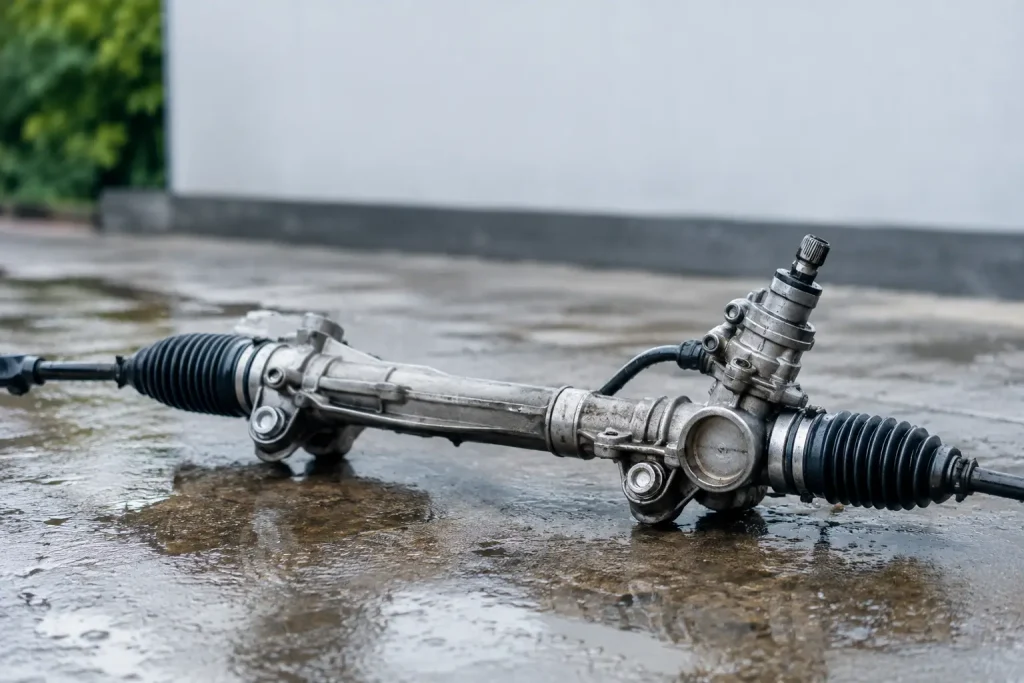
A torn gaiter, a deep flood, or repeated water exposure in the wrong place can turn otherwise sound steering into an expensive problem. So, can water ingress damage steering rack components? Yes. Water can corrode internal rack parts, contaminate lubricant, damage seals and, on electric systems, affect sensors, connectors and the control electronics that make up the EPS assembly.
The extent of damage depends on where the water has entered, how long it has remained there and the type of steering system fitted. A prompt inspection may identify a contained issue. Continued use after water contamination, however, can lead to rough steering, leaks, internal wear and faults that cannot be resolved by replacing one external part.
How water gets into a steering rack
A steering rack is not designed to operate with water inside it. The rack bar moves through protective rubber gaiters at either end, while seals separate the internal steering mechanism from the outside environment. Those protections work well when intact, but age, road debris, incorrect fitting or accident damage can create an entry point.
The most common route is through a split, loose or perished steering rack gaiter. The gaiter does more than keep the visible components clean. It protects the inner track rod joint and helps keep water, grit and road salt away from the polished rack bar. If moisture reaches this area, corrosion can form on the bar. Each time the steering is turned, that damaged surface can pass through the rack seal, wearing its sealing lip and allowing further contamination or fluid loss on hydraulic systems.
Floodwater is a separate concern. Water can reach areas that are normally protected, particularly if a vehicle has been standing in deep water. Pressure washing underneath a vehicle is usually not a problem when components are in good condition, but directing high-pressure water at compromised gaiters, electrical connectors or seals can force moisture into vulnerable areas.
On some vehicles, blocked scuttle drains or water leaks into the cabin can also affect the steering column, lower shaft connections or electrical parts associated with the steering system. The rack may not always be the first component affected, which is why diagnosis should consider the complete steering system rather than assuming the rack is at fault.
Can water ingress damage an electric steering rack?
It can, and electric power steering needs particularly careful assessment. Many modern EPS racks incorporate an electric motor, torque or position sensors, wiring connections and an electronic control unit. These components are protected against normal road conditions, but they are not immune to prolonged submersion, damaged seals or water entering through a compromised housing or connector.
Moisture in an electrical connection can cause corrosion and increased resistance before it causes a complete failure. The driver may initially notice an intermittent warning light, a changing steering assistance level, or a fault that appears only in wet conditions. As corrosion progresses, communication faults and sensor-related diagnostic codes may become more persistent.
Water damage does not automatically mean the complete EPS rack must be replaced. In some cases, the issue is external wiring, a connector, or a related vehicle fault. In others, the rack assembly may require component-level inspection, repair or reconditioning. The decision depends on the design of the unit, the condition of its mechanical internals and whether the electronic elements can be tested and returned to reliable operation.
Where an EPS rack is repaired or replaced, vehicle-specific coding and calibration may also be needed. Certain units require flashing or virginising before they can be correctly configured to the vehicle. A steering angle sensor calibration and wheel alignment may be required afterwards, particularly where steering components have been removed or disturbed.
What water damage looks like in practice
The early signs are not always dramatic. A vehicle may develop a slight tight spot as the wheel is turned, a notchy feel around part of the steering travel, or a steering wheel that does not self-centre as cleanly as it once did. These symptoms can also have other causes, including suspension joints, column universal joints and alignment issues, so they should not be used alone to condemn a rack.
Visible evidence matters. A damaged gaiter, corrosion around the inner rack area, water trapped inside a gaiter, or rusty inner track rod components all justify closer investigation. Fluid leakage from the rack ends on a hydraulic system can indicate that corrosion has damaged the rack bar or internal seals, although leaks have several possible causes.
For electric systems, steering warning messages, reduced assistance, heavy steering and stored fault codes warrant a proper diagnostic assessment. A warning light after flooding should never be dismissed simply because the steering has temporarily returned to normal. Electrical faults can be intermittent at first and worsen as moisture and corrosion affect terminals or circuit boards.
Why road salt makes the problem worse
Clean water can still cause corrosion if it remains trapped, but UK winter road salt makes water ingress far more damaging. Salt solution is conductive and accelerates corrosion on steel rack bars, fasteners, electrical terminals and exposed metal sections of steering shafts.
This is one reason a gaiter should not be viewed as a minor cosmetic rubber component. Once it has split, contaminated water can remain around the rack bar for weeks or months. The vehicle may still steer acceptably while corrosion develops out of sight. By the time a leak, stiffness or abnormal noise becomes obvious, the damage can be more extensive.
Vehicles used on salted roads, coastal routes, building sites or rural lanes often deserve a closer look when steering work is being carried out. This is also relevant to lower-mileage cars. A vehicle that sits unused for long periods can retain moisture around damaged protective components and develop localised corrosion despite limited use.
Diagnosis before repair or replacement
A correct repair path starts with establishing where the water has been and what it has affected. An external inspection should include the gaiters, inner joints, rack mountings, steering shaft area and relevant electrical connectors. On a hydraulic rack, the technician will also consider the condition and source of any fluid leakage. On EPS, diagnostic equipment helps identify communication, motor, torque sensor and position sensor concerns.
The rack should then be assessed on its own merits. A corroded rack bar may have damaged seals, while a rack with a sound internal mechanism may only need associated external parts addressed. Similarly, an EPS fault code does not prove the control unit inside the rack has failed. Wiring integrity, voltage supply, earth connections and vehicle-specific fault information are all relevant.
This is where specialist steering diagnostics can prevent unnecessary complete-unit replacement. Pro Power Steering assesses suitable steering units at component level, using workshop testing to establish whether reconditioning is viable and what supporting work is required. Not every water-affected rack can be repaired safely or economically, especially where corrosion is severe or electronics are beyond recovery, but a tested assessment gives owners and workshops a clearer decision.
The right response after suspected ingress
If water ingress is suspected, avoid treating new noises, stiffness or warning lights as a problem that will simply dry out. Continued driving can score internal components, worsen corrosion and create a safety concern if steering assistance becomes unreliable.
For a vehicle that has been through floodwater, tell the repairer how deep the water was, whether the engine or cabin was affected, and when the steering symptoms began. That history is useful because it helps distinguish a direct rack issue from a wider electrical or mechanical problem. A vehicle that has only developed a split gaiter may need a very different repair from one that has been submerged.
After rack removal, repair or replacement, the job is not always finished at the mounting bolts. The steering wheel position, geometry and electronic calibration must be checked where applicable. Wheel alignment is particularly relevant because incorrect alignment can leave the steering wheel off-centre, affect tyre wear and make a sound rack feel imprecise.
Water ingress is often preventable damage, but it is not always immediately visible. If the steering has become heavy, inconsistent, noisy or accompanied by an EPS warning, arranging an informed inspection early gives the best chance of preserving safe, smooth and precise steering.
