
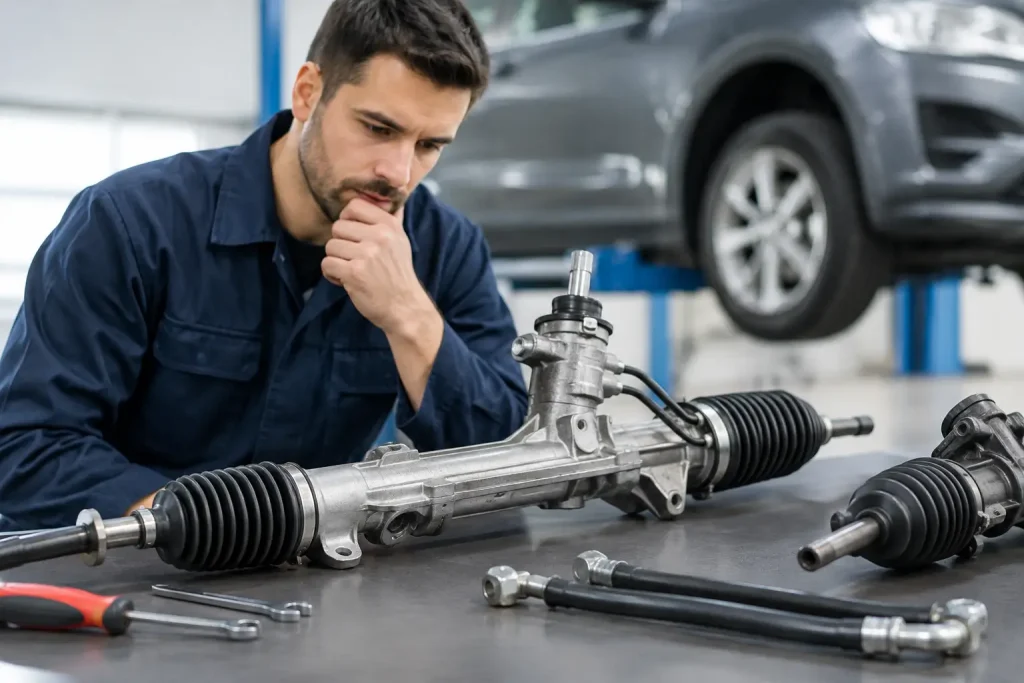
A patch of red or amber fluid beneath the front of a vehicle is easy to dismiss until the steering starts to feel heavier, noisier or less consistent. Effective steering leak solutions do not begin with adding fluid or replacing parts on assumption. They begin by confirming the source of the leak, assessing the condition of the complete steering assembly and deciding whether a component-level repair, reconditioned unit or replacement is the soundest route.
For hydraulic steering systems, fluid loss can affect assistance, accelerate internal wear and leave the vehicle difficult to control at low speed. The visible leak may be small, but the underlying fault can be more significant. A specialist assessment helps avoid fitting the wrong part while protecting the safe, smooth and precise steering the vehicle should deliver.
Why identifying the source matters
Fluid naturally travels across undertrays, subframes and suspension components while the vehicle is moving. As a result, the place where fluid drips onto the ground is not always where the leak started. A rack can appear to be leaking when fluid has run down from another connection, while an internal rack seal failure may remain hidden beneath a gaiter.
A proper steering diagnosis considers the fluid type, its condition, the area around the pinion input, hydraulic ports, rack housing and gaiters, plus the way the steering performs under load. Fluid found inside a rack gaiter is a particularly useful warning sign. The gaiter is intended to protect the inner joint from water and road debris, not to retain power steering fluid. Its presence can indicate that an internal rack seal has failed.
The vehicle’s symptoms also matter. Heavy steering, intermittent assistance, groaning on full lock, a notchy feel or fluid that requires regular topping up all add context. On older vehicles, corrosion on the rack shaft can damage a replacement seal quickly if it is not addressed as part of the repair. On specialist, performance and classic vehicles, the exact rack specification and right-hand drive configuration are equally important.
Steering leak solutions depend on the fault
There is no single correct repair for every leak. The best option depends on where the fault sits, the condition of the unit, parts availability and the vehicle’s intended use. A family car, working van, restored classic and modern premium vehicle may all need a different approach even when the symptom is broadly the same.
Resealing and component-level reconditioning
Where the steering rack is suitable, reconditioning can be a practical and cost-effective alternative to fitting a complete new unit. The rack is stripped, cleaned and inspected so that wear, corrosion and internal damage can be identified rather than concealed. Seals, bearings and other serviceable components can then be renewed using appropriate OE or OE-quality parts where applicable.
This approach is not simply a seal change. The condition of the rack bar, pinion, valve assembly, housing and mounting points determines whether a dependable repair is possible. A deeply pitted shaft, cracked casing or damaged hard part may rule out reconditioning, or require further components that are no longer available. An honest specialist will explain those limitations before work proceeds.
A correctly reconditioned rack should be tested before leaving the workshop. Testing helps verify hydraulic operation, sealing and steering movement under controlled conditions, providing more confidence than replacing an external seal without investigating why it failed.
A reconditioned exchange unit
For many common vehicles, a reconditioned exchange rack can reduce vehicle downtime. This is often useful for independent garages, fleet operators and customers who need a known, tested unit supplied for fitting. However, the supplied rack must match the vehicle precisely. Mountings, steering ratio, hydraulic connections, electronic specification and rack travel can vary across the same model range.
For right-hand drive vehicles in particular, assuming that a similar-looking component is correct can create costly problems. The correct identification process should use the vehicle details and, where necessary, numbers from the original unit. This is especially relevant to premium marques, imported vehicles and specialist applications.
New or replacement components
Complete replacement remains the right decision in some cases. A unit may be beyond economic repair, structurally damaged, unavailable for reconditioning or affected by a fault for which reliable internal parts cannot be sourced. New replacement components can also be appropriate where the vehicle manufacturer requires a specific updated part number.
Replacement is not automatically the better repair, though. Availability, cost, lead times and the quality of the replacement all need consideration. A tested, correctly reconditioned original unit can be preferable to an uncertain aftermarket alternative, particularly on older, classic or specialist vehicles where the original steering characteristics matter.
What a proper steering repair should include
Removing and refitting a steering rack is only one part of the job. The surrounding system must be checked so that contamination, incorrect fluid or a separate fault does not compromise the repaired component. Any fluid loss should be investigated before the vehicle is returned to service, and the system should be filled and bled in line with the vehicle’s requirements.
The steering wheel position and front-wheel alignment also require attention after rack removal or replacement. Even a small change to toe settings can cause poor straight-line stability, an off-centre steering wheel and rapid tyre wear. Wheel alignment is therefore a necessary finishing step, not an optional extra.
On vehicles fitted with electronic power steering or steering-angle sensors, further procedures may be needed. A replacement or reconditioned EPS rack may require coding, flashing, virginising or calibration so that it communicates correctly with the vehicle. In some cases, dealer-level software access or manufacturer procedures are required. This is not a failure of the rack repair; it is part of ensuring a modern vehicle’s steering and safety systems operate as designed.
When the leak is not a hydraulic rack problem
Not every steering concern involving fluid is a rack fault, and not every heavy steering complaint is caused by a leak. Electric power steering systems do not use hydraulic fluid for assistance, so a visible oil leak should be traced independently rather than attributed to the EPS unit. Meanwhile, a worn steering column joint, seized linkage, tyre issue or alignment fault can alter steering feel without any fluid loss at all.
This is why accurate diagnosis is more valuable than a quick visual judgement. It separates a genuine hydraulic rack leak from related faults and prevents unnecessary replacement of major components. For garages, it also provides a clearer basis for advising the customer and planning the repair.
Choosing a specialist repair route
A steering fault affects more than convenience. It affects driver confidence, tyre wear, vehicle control and, in severe cases, whether the vehicle remains safe to use. If power assistance drops suddenly, fluid loss is substantial, or steering becomes unusually heavy or inconsistent, the vehicle should be assessed promptly rather than driven until the next service.
Pro Power Steering assesses suitable units at component level and supports repairs, reconditioned supply and supply-and-fit work across hydraulic, manual and electronic steering systems. Completed work is workshop tested and supported by a 12-month warranty under the applicable terms. For customers and fitting garages, direct technical advice can also help establish the correct part and any coding, calibration or alignment work required.
The practical next step is simple: have the leak traced before authorising a rack replacement. A clear diagnosis gives you the best chance of retaining the right steering feel, avoiding unnecessary expense and returning the vehicle to dependable service.
