
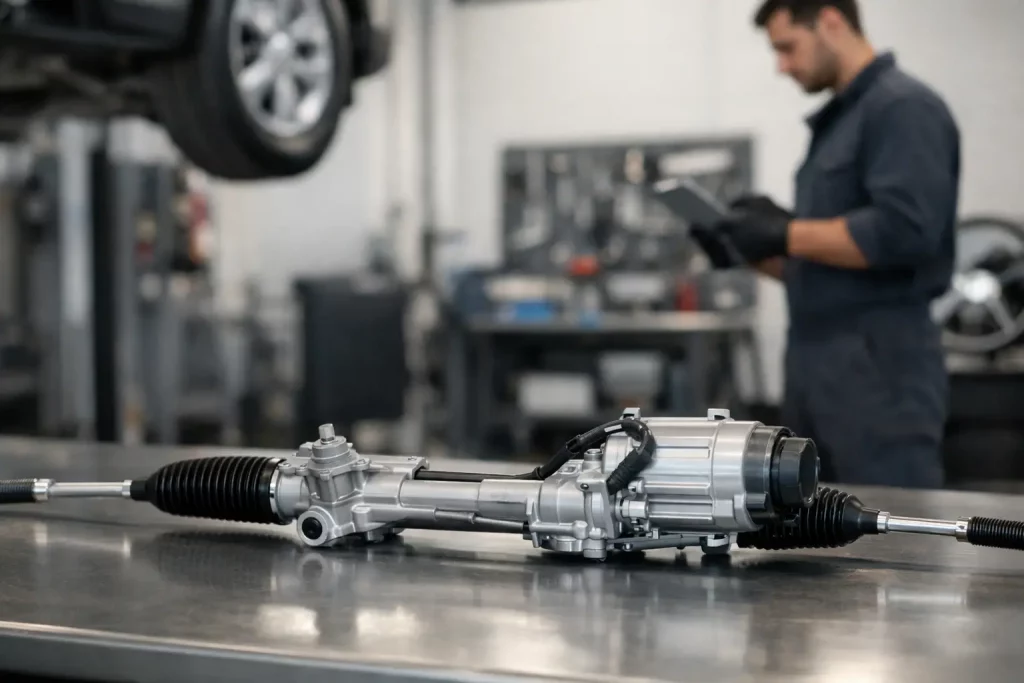
A search for an electric steering rack for sale can produce pages of units that appear identical, yet only one may be correct for the vehicle in front of you. Modern electric power steering racks are not simply mechanical assemblies. Depending on the application, they can include an electric motor, ECU, torque sensor, position sensors and vehicle-specific software. Choosing by appearance, or even by model name alone, can lead to an expensive fitting problem.
For vehicle owners and garages, the right approach starts with diagnosis and accurate identification. A suitable new, used or reconditioned rack can restore light, precise steering, but it must match the vehicle’s specification and be installed with the necessary coding, calibration and alignment work.
Choosing an electric steering rack for sale
The first requirement is an exact match. Registration details are useful, but they are not always enough. Manufacturers may fit different rack versions during the same production run, with changes based on engine, drivetrain, wheelbase, suspension package, steering ratio, trim level or factory options.
The original rack part number is therefore a valuable starting point. The vehicle identification number, rack label, motor number and ECU references can also help establish compatibility. This matters particularly on premium and specialist vehicles, where a rack from the same model family may have different electronics or a different steering ratio.
Right Hand Drive specification deserves particular attention. A Left Hand Drive rack may look broadly similar, but its input arrangement, housing, travel, hydraulic connections where present, software or mounting details can differ. For UK vehicles, a properly identified Right Hand Drive unit avoids unnecessary delay once the car is on the ramp.
New, used or reconditioned?
A new genuine unit may be the correct option where the manufacturer requires a specific replacement, where the rack cannot be economically rebuilt, or where an updated part is only available new. However, availability can be limited and the cost can be substantial, especially for electronically controlled racks.
A used rack may initially appear attractive, but its internal condition and electronic history are usually unknown. Wear in the rack mechanism, water ingress, sensor faults or a stored vehicle configuration may not be apparent before installation. It can be a reasonable route in a limited number of circumstances, but it should not be treated as a like-for-like substitute for a tested unit.
A professionally reconditioned electric rack is often a sound alternative when the original assembly is suitable for component-level repair. The work should address the actual fault, rather than merely clean and repaint the casing. Appropriate internal components are inspected and renewed as required, the mechanical operation is checked, and the completed rack is tested before it leaves the workshop.
At Pro Power Steering, suitable units are assessed individually. Some can be reconditioned effectively; others may require replacement because of severe corrosion, accident damage, unavailable electronic parts or faults that make a reliable repair unsuitable. That assessment is more useful than assuming every failed rack needs a complete new assembly.
Diagnose the fault before ordering
Heavy steering, an intermittent assistance warning, a notchy feel or poor self-centring can all point towards an EPS rack, but they do not prove that the rack itself has failed. A low battery voltage, charging fault, damaged wiring, poor earth, steering column issue, wheel alignment problem or a fault elsewhere on the vehicle network can cause similar symptoms.
A proper diagnostic process should include reading manufacturer-level fault codes, reviewing live data where available and checking the power and communication circuits relevant to the system. On many vehicles, the steering ECU records faults relating to motor current, torque sensor plausibility, internal position sensing and CAN communication. The wording of a code is a direction for investigation, not always a final diagnosis.
Mechanical checks are equally relevant. Outer and inner track rod wear, seized suspension joints, tyre condition and incorrect alignment can make the steering feel heavy or imprecise. Fitting a replacement electric rack without resolving these underlying issues risks repeating the complaint and can affect calibration results.
For trade customers, clear fault information and the rack identification details make the supply process more efficient. If the original rack is still fitted, photographs of the labels and connectors can help confirm the correct route before the vehicle is dismantled.
Coding and calibration are part of the job
An electric steering rack may need more than physical installation. Many systems require vehicle-specific coding, software flashing or initialisation before power assistance operates correctly. Certain racks retain configuration data from their previous vehicle, while others must be programmed with the appropriate vehicle data after fitting.
Where applicable, a rack can be flashed or virginised in preparation for coding. This does not remove the need for the fitting garage to use suitable diagnostic equipment and follow the manufacturer’s process. In some cases, dealer-level tools or manufacturer access may still be necessary.
Steering angle sensor calibration and end-stop learning may also be required. These procedures allow the relevant control units to recognise the straight-ahead position and rack travel. If the vehicle has lane assistance, stability control, adaptive lighting or other driver-assistance systems, correct steering data is especially significant.
A four-wheel alignment should be carried out after rack replacement. The steering wheel must be held correctly centred, toe settings adjusted to specification and the final geometry report checked. Alignment is not an optional finishing touch: it affects tyre wear, straight-line stability and the accuracy of steering-angle-related systems.
What a tested reconditioned rack should offer
The term “reconditioned” is used widely, so it is sensible to ask what has actually been done. The answer will vary by rack design and the diagnosed fault, but the process should be based on inspection and measured repair rather than assumption.
A specialist assessment may involve checking the mechanical rack and pinion operation, bearing condition, seals, housing integrity, track rod assemblies where applicable, motor operation and electronic communication. The unit should then be tested for smooth, consistent operation before dispatch or refitting. A clean exterior alone does not demonstrate that the rack has been rebuilt or function-tested.
It is also worth confirming what is supplied. Some racks are supplied without track rod ends, gaiters, mounting bushes, steering column couplings or fastening hardware. These items may need inspection or renewal during installation. Knowing this before booking ramp time helps a workshop plan the job correctly.
Completed repair or reconditioning work should come with clear warranty terms. Pro Power Steering supports completed work with a 12-month warranty under the applicable terms, while also providing direct technical advice when a fitting garage needs clarification on identification, coding or installation requirements.
Supply-only versus supply and fit
Supply-only is practical for independent garages, experienced trade customers and owners working with a trusted workshop. It offers flexibility, provided the installer can carry out the required diagnostic work, coding and alignment. Before ordering, agree who is responsible for confirming the fault, identifying the correct rack and completing post-fit calibration.
Supply and fit can be preferable where the fault is uncertain or the vehicle has a complex EPS system. Keeping diagnosis, rack work, installation and verification within a specialist process reduces the risk of separate parties reaching different conclusions. It is particularly helpful where the original unit needs examination to establish whether reconditioning is viable.
For suitable components, UK-wide collection and delivery can also make specialist rack reconditioning practical when the vehicle cannot be brought directly to the workshop. The key is to provide accurate vehicle and fault details from the outset, rather than sending an unidentified assembly for a speculative repair.
Questions worth answering before purchase
Before committing to an electric rack, establish whether the current fault has been diagnosed, whether the rack number has been verified and whether the replacement is Right Hand Drive where required. Confirm whether it is new, used or reconditioned, what testing has been completed, and whether the electronics need flashing, virginising or coding.
Also check the practical requirements after fitting: steering angle calibration, end-stop learning, four-wheel alignment and any driver-assistance recalibration. These steps affect how the vehicle feels and how safely its electronic systems interpret the driver’s steering input.
The best electric steering rack is not simply the fastest unit to source. It is the correctly identified, properly assessed unit supported by the diagnostic information and calibration work needed to return the vehicle to smooth, accurate and dependable steering.
