
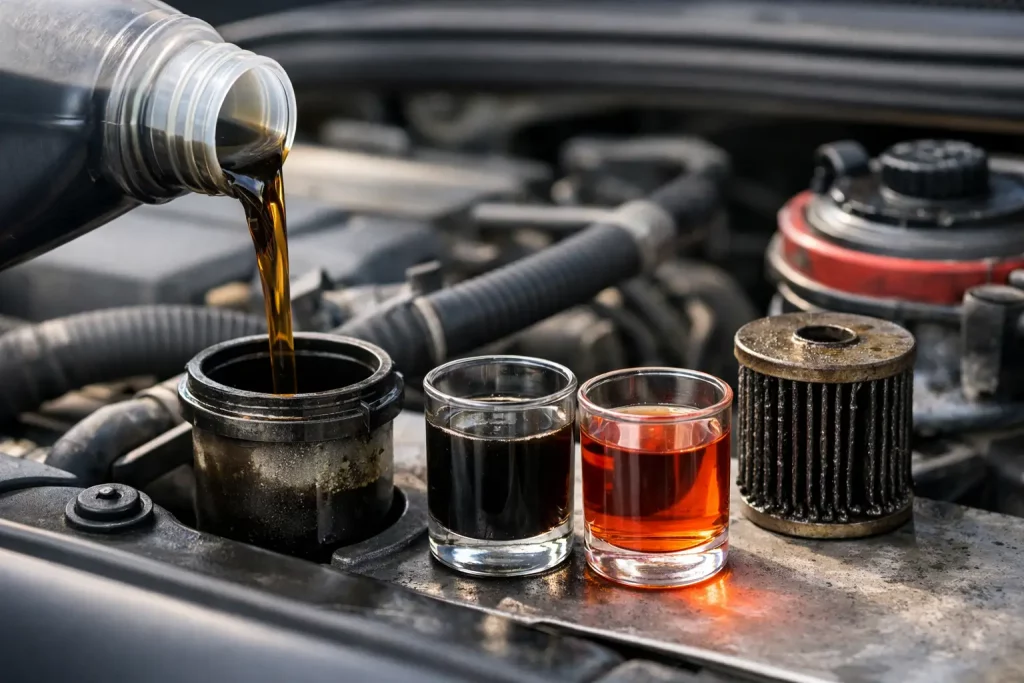
A steering fluid reservoir can reveal far more than a low level. In a healthy hydraulic system, fluid should be the correct specified type, reasonably clear and free from visible debris. This power steering fluid contamination guide explains what discoloured or dirty fluid can mean, why simply changing it is not always the answer, and how a specialist diagnosis protects the steering rack, pump and overall driving safety.
What power steering fluid contamination means
Contamination is any material or condition in the fluid that prevents it from lubricating, transferring hydraulic pressure and protecting internal parts as intended. It may be obvious, such as metallic particles or black sludge, but it can also be less visible. Moisture, degraded additives and incompatible fluid can all affect the way a hydraulic steering system performs.
The fluid circulates through close-tolerance components. Within a hydraulic rack, for example, seals, valves and internal surfaces rely on clean fluid to operate smoothly. Contaminants can score surfaces, restrict small hydraulic passages and accelerate seal wear. The result may be heavier steering, inconsistent assistance, noise, leaks or a steering wheel that does not return as it should.
Fluid condition alone does not identify the failed part. It is evidence that must be considered alongside the vehicle’s symptoms, service history, steering effort and inspection findings. A dark reservoir does not automatically mean the rack has failed, just as fresh-looking fluid does not prove the system is healthy.
Common signs of contaminated steering fluid
Colour can offer an initial clue. Fluid that is dark brown or black may have deteriorated through age and heat, while a milky appearance can suggest moisture or aeration. A foamy reservoir often points to air entering the system, incorrect fluid, an overfilled reservoir or a circulation issue. Each possibility needs checking before parts are ordered.
A metallic sheen or fine glitter in the fluid is more concerning. It can indicate internal wear in a pump, rack or steering box. Larger particles may be trapped in the reservoir or filter arrangement, where fitted, but their presence still needs investigation. Continuing to operate a system with metal circulating through it can turn a contained component failure into wider damage.
Drivers and workshops may also notice symptoms before looking at the fluid. These include a whining or groaning noise while turning, assistance that varies between left and right lock, a stiff steering wheel at parking speeds, judder through the wheel, or a delayed return towards centre after a corner. Some of these faults can arise from tyres, suspension geometry or mechanical binding, so the steering system should not be condemned on symptoms alone.
Why power steering fluid becomes contaminated
Heat is one of the most common causes of fluid degradation. Hard use, heavy vehicle loading, repeated low-speed manoeuvring and an ageing system can raise fluid temperatures over time. The fluid’s additives then deteriorate, reducing its ability to lubricate and protect seals and precision hydraulic surfaces.
Internal wear is another cause. As a rack, pump or steering box develops wear, tiny particles can enter the fluid. These particles circulate and may cause further abrasion elsewhere in the system. This is why fitting one replacement component into an unaddressed contaminated system carries a risk. The source of debris and the condition of the remaining circuit both matter.
Moisture can enter through poor storage, incorrect servicing practices or deteriorated sealing arrangements. It may encourage corrosion within components and alter the fluid’s properties. Mixing fluids is also a frequent issue. Steering systems are designed around specific mineral, synthetic or manufacturer-approved fluids. An unsuitable product can affect seal compatibility, create foaming or reduce assistance quality, even when the reservoir is full.
On older, classic and specialist vehicles, contamination may simply reflect years of limited use and unknown maintenance history. These systems often need a careful assessment because parts availability, original specifications and previous modifications can all influence the correct repair route.
Diagnosis before flushing or replacing parts
A fluid change may be appropriate where the system is otherwise sound and contamination is limited to aged or degraded fluid. It is not, however, a cure for a worn rack, failing pump, damaged steering box or a system generating metal debris. Replacing fluid without resolving the underlying cause can produce a brief improvement while the new fluid is quickly contaminated again.
A proper assessment starts with confirming the steering system type and specified fluid. The technician should inspect the reservoir, fluid condition and level, then assess for leaks, external damage, loose connections and signs of aeration. Steering effort, noise and operation across the full range of travel provide further evidence.
Where rack or pump wear is suspected, the system may need more detailed checks. This can include examining recovered fluid and filters for debris, assessing pressure and flow where appropriate, and checking whether symptoms are hydraulic, mechanical or electronic. Wheel alignment and suspension condition also deserve attention, particularly where the complaint is poor self-centring, pulling or an imprecise steering feel.
Modern vehicles add another layer. Many use electric power steering or electro-hydraulic systems, and a conventional fluid issue does not apply to a fully electric rack. EPS faults may instead involve torque sensors, motors, wiring, control modules, coding or calibration. It is essential to identify the fitted system before a fluid-related diagnosis begins.
When contamination points to rack reconditioning
If a hydraulic rack is confirmed as the source of internal contamination, component-level reconditioning may be a suitable option for many vehicles. A specialist process involves stripping the unit, inspecting internal components, replacing worn or damaged serviceable parts where appropriate, rebuilding to specification and testing the completed unit before it leaves the workshop.
This approach can be a practical alternative to automatic complete replacement, especially for hard-to-source Right Hand Drive applications, older models and specialist vehicles. Suitability depends on the rack’s condition. Severe corrosion, damaged castings, unavailable internal parts or previous poor repairs can make replacement the more sensible route.
The rest of the system must be considered at the same time. If contaminated fluid remains in lines, coolers or the reservoir, it can compromise a reconditioned component. The fitting garage should follow the correct cleaning and fluid procedure for the vehicle, use the specified fluid and confirm that no related component is continuing to shed debris or introduce air.
Protecting the repair after contamination
Once the root cause has been addressed, the system should be filled and bled using the correct manufacturer-approved fluid and procedure. Overfilling, mixing products or allowing the system to run with air present can create new symptoms that resemble the original fault. A road test should confirm consistent assistance, quiet operation and predictable steering response.
Where a rack has been removed or steering geometry disturbed, wheel alignment is normally required. On relevant modern vehicles, coding, steering-angle calibration or EPS set-up may also be necessary. These are not optional finishing touches: they can affect warning lights, driver-assistance functions and the vehicle’s ability to steer accurately.
For garages and owners dealing with uncertain symptoms, retaining a sample or clear record of the contaminated fluid can be useful when discussing the fault with a steering specialist. Pro Power Steering can assess suitable hydraulic racks, pumps and steering boxes at component level, with tested reconditioned solutions and technical support for fitting workshops where required.
Clean fluid is not merely a maintenance detail. It is part of the evidence trail that helps distinguish an ageing system from one developing an expensive internal fault. Acting on that evidence early gives the best chance of restoring steering that feels smooth, controlled and precise.
