
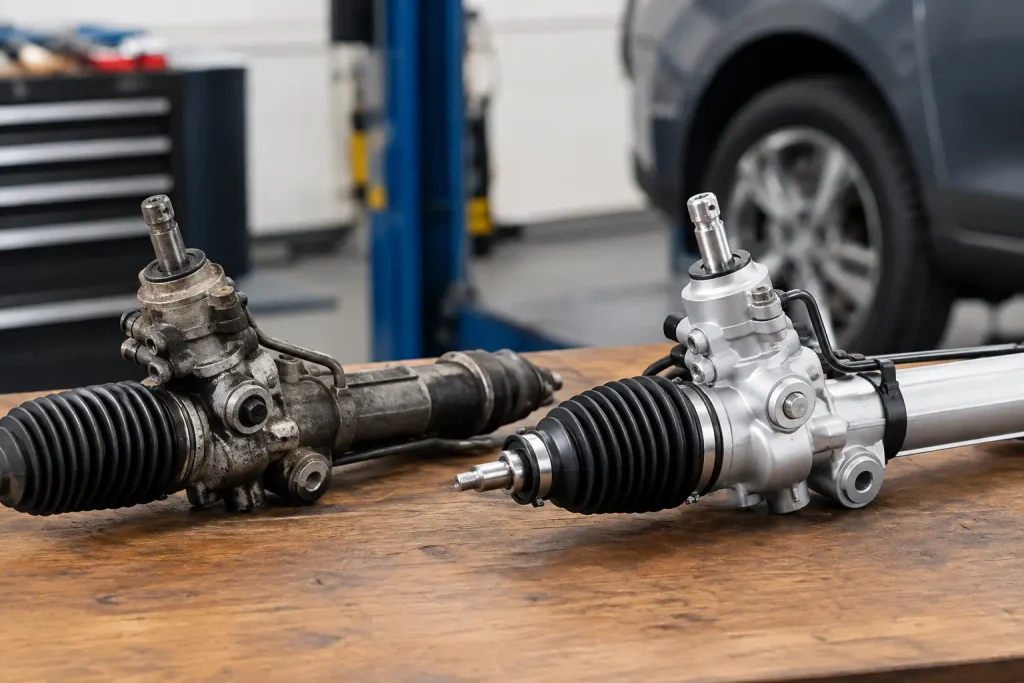
A steering box can make a heavy vehicle feel vague, reluctant to turn or unexpectedly difficult to control long before it fails completely. The right choice between steering box repair versus replacement is therefore not simply about finding the lowest initial price. It depends on the condition of the unit, the source of the fault, parts availability and whether the repaired system can be returned to safe, smooth and precise operation.
Steering boxes remain common on many classic cars, 4x4s, commercial vehicles and specialist applications. They are durable assemblies, but wear in shafts, bearings, seals and internal gears can gradually affect steering feel. A specialist inspection is the sensible starting point, particularly where a replacement unit is expensive, unavailable or unsuitable for a Right Hand Drive vehicle.
What a steering box fault can feel like
Drivers often first notice excessive free play at the steering wheel. The vehicle may wander, require continual correction or feel imprecise when changing direction. Other signs include stiffness through part of the steering movement, a knock felt through the wheel, fluid leakage from a hydraulic box, or steering that does not self-centre as expected.
These symptoms do not automatically prove that the steering box is at fault. Worn track rod ends, steering joints, column couplings, suspension bushes, tyres and wheel alignment can all alter steering response. On a hydraulic system, a loss of assistance may also need separate investigation. Replacing or rebuilding a box before the wider system has been assessed can leave the original complaint unresolved.
For this reason, accurate steering diagnostics should establish both the condition of the box and the condition of the components around it. A box that appears loose at the wheel may be serviceable, while movement elsewhere in the steering linkage is the real issue.
When steering box repair is the better option
A properly reconditioned steering box can be an excellent solution when the main housing and critical internal components remain suitable for service. Component-level repair allows the unit to be stripped, cleaned and inspected rather than treating it as a sealed, disposable part.
During refurbishment, a specialist can assess the worm and sector gears, shafts, bearings, seals, bushes and adjustment mechanism. Worn serviceable items can be replaced using appropriate OE or OE-quality parts where applicable. The box can then be rebuilt to the correct settings and tested before it leaves the workshop.
Repair is particularly valuable for older, classic and specialist vehicles. A new box may no longer be available, may only be supplied in an incorrect specification, or may involve a long supply chain. For restoration work, retaining the original correctly identified unit can also avoid fitment problems and help preserve the vehicle’s intended steering characteristics.
Reconditioning may also be preferable where a replacement box is available only as an exchange unit with an uncertain history. The quality of an exchange component depends on how comprehensively it has been rebuilt, whether it matches the vehicle application and whether it has been tested under realistic operating conditions.
That said, repair is not a universal answer. A steering box must be assessed on its own merits. Severe corrosion, a cracked housing, extensive damage to gears or shafts, or unavailable core parts may make a reliable refurbishment impractical. In those cases, replacement is the safer and more sensible route.
Adjustment is not the same as repair
Many steering boxes have an external adjustment intended to compensate for a limited amount of normal wear. It is not a cure for internal damage or generalised wear across the box. Over-adjustment can cause tight spots, poor self-centring and accelerated internal wear, especially around the straight-ahead position.
If a box has excess play, the cause needs to be identified before any adjustment is made. A correctly rebuilt unit should provide controlled steering without being artificially tightened to disguise worn components.
When replacement is the right decision
Complete replacement is often appropriate when a box is beyond economical or safe repair, or when a correct new or professionally remanufactured unit is readily available. It can also suit a fleet or working vehicle where downtime is critical and a confirmed replacement can be fitted quickly.
The important word is correct. Steering boxes vary by vehicle, axle layout, steering arm position, input shaft type, lock-to-lock ratio, hydraulic connections and Right Hand Drive or Left Hand Drive configuration. A unit that looks similar may not deliver the correct steering geometry or clearance once installed.
Replacement may require associated work too. A worn steering arm, damaged linkage, deteriorated column coupling or poor alignment can shorten the life of the replacement box or produce the same poor handling symptoms. Once the work is complete, wheel alignment should be checked and set where required. This is particularly important after steering linkage disturbance, suspension work or changes to ride height.
For some applications, a replacement unit is the only responsible option. The goal should never be to save a component at any cost. It is to restore dependable steering that responds predictably in normal driving, under load and during emergency manoeuvres.
Steering box repair versus replacement: comparing the real costs
The purchase price tells only part of the story. Repair can offer good value where the existing unit is suitable for reconditioning and a new replacement is costly or difficult to source. It may also reduce the risk of receiving an incorrectly specified unit for a rare or specialist vehicle.
Replacement can make financial sense where the required unit is readily available and the original box has suffered damage that would require extensive parts and labour. It can also simplify planning for some commercial operators, provided the replacement is correctly matched and comes from a dependable source.
Both routes involve more than the box itself. The total job may include removal and refitting, flushing or addressing contamination where relevant, new seals or fixings, steering linkage inspection, wheel alignment and a road test. If the vehicle has an electronic steering-related warning or an integrated control system, diagnostic checks and vehicle-specific procedures may be necessary as well.
A specialist quotation should therefore be based on the actual fault and vehicle specification, not a generic assumption that every leak needs a new box or that every worn box can be rebuilt. That approach gives owners and fitting garages a clearer view of cost, lead time and the likely scope of work.
Why vehicle specification matters
Steering systems are not interchangeable simply because they fit physically. This is especially relevant on imported vehicles, converted vehicles, performance models and older cars with multiple steering-box options across the production run.
Right Hand Drive systems can have different castings, shaft arrangements and hydraulic port positions from their Left Hand Drive equivalents. Supplying or rebuilding the wrong configuration can create installation issues or result in incorrect steering operation. Vehicle identification details, part numbers, photographs and symptoms are useful when a unit is being assessed remotely.
For classic and restoration projects, previous repairs can add another complication. A vehicle may no longer carry its original box, or modifications may have changed the steering linkage. A careful identification process helps avoid ordering parts based only on registration data where that information may not tell the full story.
What a professional refurbishment process should include
A credible steering-box repair begins with inspection, not a presumption that seals alone will solve the fault. The unit should be stripped sufficiently to identify internal wear, corrosion and damage, then measured against serviceable tolerances where applicable.
Once rebuilt, the box should be set correctly and tested for smooth operation, excessive play and leaks. Testing is a vital distinction between reconditioning and a cosmetic clean-up. It helps confirm that the repair has addressed the fault before the unit is returned for installation.
At Pro Power Steering, suitable steering units are assessed at component level, rebuilt using appropriate parts and tested before leaving the workshop. Completed work is supported by a 12-month warranty under the applicable terms, with direct technical advice available to customers and fitting garages where needed.
Choosing the sensible route for your vehicle
If the steering box is repairable, refurbishment can retain the correct unit, control costs and return steering precision without unnecessary complete replacement. If the box is structurally damaged, excessively worn or unsupported by available parts, replacement may be the only dependable choice.
The useful question is not whether repair is always cheaper than replacement. It is whether the chosen route has been based on a proper diagnosis, correct vehicle identification and a realistic assessment of the unit’s condition. That is how a steering repair becomes a lasting improvement rather than a temporary answer.
