
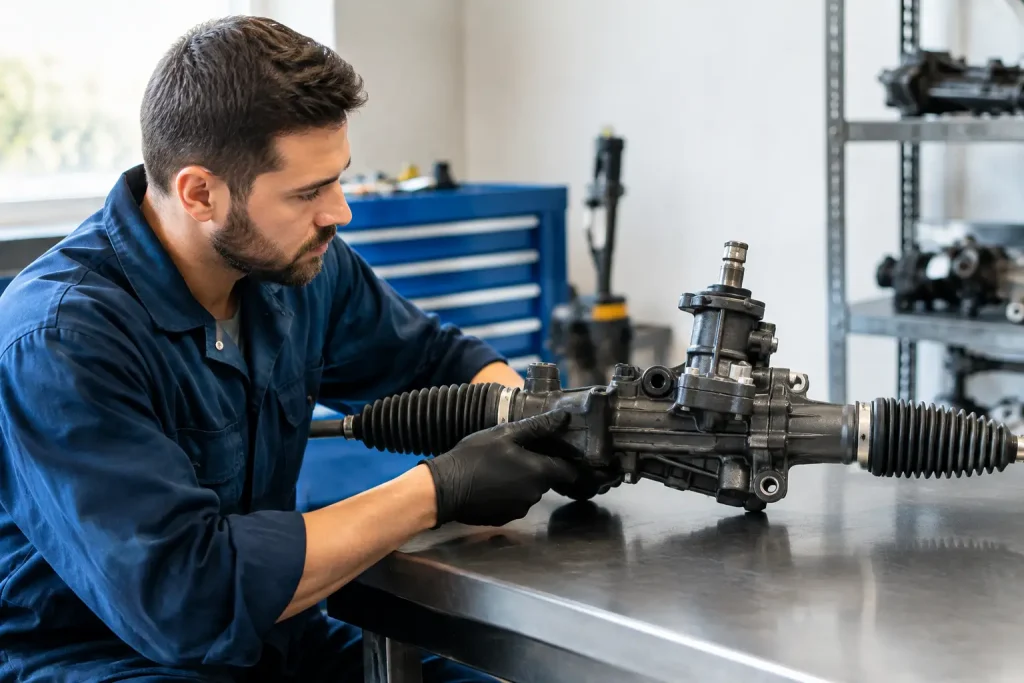
A steering rack that leaks, knocks or feels inconsistent is not automatically a case for a costly new replacement. Steering remanufacturing can provide a reliable route back to smooth, accurate steering when the original unit is suitable for component-level repair. The key is establishing what has actually failed before deciding whether reconditioning, replacement or further vehicle diagnosis is the correct path.
For vehicle owners and workshops, the distinction matters. A steering fault can affect safety, tyre wear, driver confidence and the way a vehicle behaves on the road. Replacing parts without identifying the cause may leave the underlying issue unresolved, particularly on modern electrically assisted systems.
What steering remanufacturing involves
Steering remanufacturing is the professional restoration of a suitable steering component to working condition. It is more involved than fitting seals to a unit or giving an old component a cosmetic clean. The unit is stripped, assessed internally, rebuilt using appropriate OE or OE-quality parts where applicable, then tested before it leaves the workshop.
The process may apply to hydraulic steering racks, manual racks, steering boxes, certain steering columns and, on applicable vehicles, electric power steering (EPS) racks. Each component has different wear points and different limitations, so the right repair process depends on the design of the system and the condition of the original part.
A hydraulic rack may require attention to internal seals, bearings, guides, rack bar condition and valve assemblies. A steering box can need adjustment and renewal of worn internal components to restore controlled movement without excessive play. On an EPS rack, mechanical condition is only part of the picture: the motor, torque sensor, electronic control system and vehicle coding requirements can all influence whether remanufacturing is viable.
The aim is not simply to make the unit operate on a bench. It is to return a suitable component to a condition that supports safe, predictable and precise steering once correctly fitted, aligned and calibrated where required.
Why accurate diagnosis comes first
Steering symptoms can be misleading. A heavy steering complaint may originate in the rack, but it can also be caused by a binding suspension joint, an electrical supply issue, a damaged steering shaft, incorrect wheel alignment or a fault stored within an EPS control system. Likewise, a knocking noise that appears to come from the rack may be related to track rod ends, inner joints, mounting points or suspension components.
This is why a specialist assessment begins with the vehicle symptoms, the component type and the available diagnostic evidence. For modern vehicles, fault codes and live data can be highly useful, but they must be interpreted alongside physical checks. A stored EPS code does not always prove that the rack itself has failed, and a mechanically worn rack may not always generate an electronic fault code.
For garages, this diagnosis-led approach reduces the risk of fitting a replacement unit only to find that warning messages, heavy assistance or poor steering feel remain. For owners, it helps avoid paying for a complete assembly where a repair is appropriate, while also making clear when repair would be the wrong choice.
The remanufacturing process in practice
Once a unit has been accepted for assessment, it is dismantled so its condition can be checked beyond what is visible externally. This is particularly valuable where contamination, corrosion, internal wear or previous incorrect repairs may be present.
Components are inspected for damage that would affect serviceability. The rack bar, pinion area, housings, gears, bearings, seals and related internal parts are considered according to the unit type. Parts that meet the required condition can remain in service; worn or defective service items are renewed with suitable replacements. The unit is then reassembled to the required specification.
Testing is a critical stage. A remanufactured rack or steering box must be assessed for operation, leaks where relevant, smooth travel and correct response. Testing does not remove the need for proper installation checks on the vehicle, but it gives the fitting garage confidence that the component has been rebuilt and examined before dispatch.
Pro Power Steering carries out this work as a specialist steering engineering process rather than treating the rack as a disposable service part. Suitable completed work is supported by a 12-month warranty under the applicable terms.
EPS units need mechanical and electronic consideration
Electric power steering has made low-speed manoeuvring easier and allowed manufacturers to tailor steering assistance to different driving conditions. It has also made diagnosis more involved. An EPS rack may contain a motor, ECU, torque sensing arrangement and vehicle-specific software or configuration.
Where an EPS unit is suitable for remanufacture, a mechanical rebuild alone may not be enough. Some applicable racks can be flashed or virginised to prepare them for vehicle-specific coding and calibration after installation. The exact procedure depends on the vehicle manufacturer, system generation and diagnostic equipment available to the fitting workshop.
In some cases, dealer-level programming, security access or manufacturer-approved procedures may still be necessary. A remanufactured EPS rack should therefore be viewed as part of a complete repair plan, including correct fitting, coding where required, fault-code checks and steering angle sensor calibration. Skipping these stages can result in warning lights, reduced assistance or steering behaviour that does not feel correct.
When remanufacturing is a sensible choice
Remanufacturing is often worth considering when the original steering unit is structurally sound and the faults found are repairable. It can be especially useful for vehicles where a new assembly is expensive, subject to long supply times or no longer readily available. This includes many premium, performance, classic and specialist vehicles, as well as commercial applications where downtime matters.
It can also preserve the correct original configuration. Right Hand Drive racks, steering boxes and columns are not always interchangeable with parts sourced from other markets. Retaining and restoring the correct original unit can prevent issues with fitment, steering geometry, pipe routing, electrical connections or coding compatibility.
For restoration projects, remanufacturing may be the practical option where an original steering box or manual rack is an important part of the vehicle. The objective is not to erase the character of an older vehicle, but to remove unacceptable wear and return controlled, dependable steering operation.
There is a cost consideration too, although it should not be reduced to a simple comparison between a repaired unit and the cheapest available part. The relevant question is the total repair outcome: accurate diagnosis, part suitability, workshop testing, fitting requirements, wheel alignment, programming and warranty support. A correctly remanufactured unit can be a cost-effective solution, but only if it addresses the actual fault.
When complete replacement may be better
Not every steering component can or should be remanufactured. Severe corrosion, cracked or damaged housings, major accident damage, excessive wear in non-serviceable areas and unavailable critical components can make a unit unsuitable. Certain electronic failures may also require replacement rather than repair, particularly where the necessary parts, data or programming route are not available.
Replacement may also be the preferred route where a manufacturer-supplied unit includes essential software support that cannot be replicated outside the dealer network. This does not make remanufacturing inferior; it reflects the reality that steering systems vary considerably between makes, models and generations.
A specialist should be clear about these limits at the assessment stage. The right answer may be a remanufactured unit, a replacement rack, further electrical diagnosis, a steering column repair or correction of an external mechanical problem. Good steering repair is about selecting the right route, not forcing every fault into the same solution.
Installation, alignment and the final road result
Even the best remanufactured steering component depends on correct installation. The system must be fitted carefully, associated faults addressed, and the steering wheel and road wheels correctly centred. Wheel alignment is particularly important after rack replacement or steering work because toe settings affect tyre wear, straight-line stability and steering feel.
On EPS-equipped vehicles, coding and calibration must be completed where specified. A steering angle sensor may need resetting, and the vehicle should be checked for stored faults after the repair. The road test should confirm that assistance is consistent, the steering self-centres appropriately and there are no abnormal noises or warning messages.
For trade customers, direct technical support can be valuable when a vehicle has a known coding requirement or a system-specific fitting concern. It helps the repair move from a tested component on the bench to the result that matters on the road: steering that is smooth, precise and confidence-inspiring.
If a steering issue is affecting how your vehicle responds, treat the diagnosis as seriously as the replacement decision. A suitable remanufactured unit, properly tested and correctly commissioned on the vehicle, can be a sound repair that keeps the vehicle safe, accurate and ready for the miles ahead.
