
A steering rack can appear to be leaking when the rack itself is perfectly sound. Fluid can travel along pipework, collect around mounting points or settle inside a gaiter long after it escaped elsewhere. That is why how workshops trace rack leaks is not simply a matter of finding an oily area underneath the vehicle. It is a controlled diagnostic process that identifies the fluid, its path and the component that has actually failed.
For vehicle owners and fitting garages, accurate diagnosis matters because steering repairs are safety-critical and can be expensive if the wrong part is condemned. A sound diagnosis may support a component-level rack repair or reconditioning. In other cases, corrosion, internal damage, parts availability or the steering system design may make replacement the more appropriate route.
Why a visible leak is not always a rack leak
Hydraulic power steering systems contain fluid under pressure. When a seal, union or connection begins to weep, airflow and vibration can spread the fluid across the subframe, anti-roll bar, undertrays and the outside of the rack. Road dirt then sticks to it, making an old seepage look more serious than it is.
The location of the fluid offers a useful starting point, but not a final answer. Fluid around the pinion housing may come from an upper seal, a connection above the rack or fluid running down the steering column area. Wetness near an outer gaiter could indicate an internal rack seal failure, but it could also be fluid blown rearwards from another source. A split gaiter may admit water and dirt, creating a messy area without being the origin of a hydraulic leak.
The first task is therefore to establish whether the vehicle has hydraulic assistance at all. A fully electric power steering rack has no hydraulic fluid within it. On these systems, an oily rack requires a search for contamination from the engine, gearbox, driveshaft area or another nearby component, while electrical fault diagnosis follows a different path.
How workshops trace rack leaks step by step
Confirm the complaint and assess steering operation
A specialist begins with the symptoms reported by the driver or workshop. A falling reservoir level, a red or amber fluid warning where fitted, heavy steering, intermittent assistance, noise on full lock or visible drips all provide context. The vehicle history matters too. A recently replaced pump, steering hose, subframe bush or engine component may have disturbed a connection or left residual fluid behind.
Steering feel is checked before dismantling where it is safe to do so. A rack with fluid loss may still steer smoothly, while a rack with damaged internal surfaces can develop tight spots, inconsistent assistance or poor self-centring. These symptoms do not prove the source of a leak, but they help determine whether there may be a wider rack fault to investigate.
Identify the fluid and clean the affected area
Workshops do not assume that every red or brown residue is power steering fluid. Depending on the vehicle, the contamination may be engine oil, automatic transmission fluid, coolant mixed with dirt, grease from a joint or old power steering fluid. The reservoir level, fluid specification and condition are checked where accessible.
The suspected area is then cleaned thoroughly. This stage is essential. Without it, the original leak path is obscured and a technician may only see where fluid has accumulated. Cleaning also makes it possible to distinguish an active leak from historic residue following a previous repair.
Inspect the rack at its common leak points
With the area clean, the rack is inspected around the pinion input, hydraulic connections, rack body, mounting areas and both gaiters. Particular attention is paid to the condition of the gaiters and their clips. If a gaiter is swollen, saturated or contains power steering fluid, that is a strong indication that fluid has passed an internal rack seal and entered the bellows.
A rack seal can fail for several reasons. Wear on the rack bar, scoring caused by contamination, corrosion on a section of bar that travels through the seal, ageing seals and incorrect fluid can all contribute. On older vehicles and vehicles that have stood for long periods, corrosion beneath a damaged gaiter is a frequent concern. The condition of the rack bar cannot always be judged fully with the rack installed, which is why some cases require removal and strip inspection.
Run the system under the conditions that reveal the fault
Many leaks only become clear with the engine running and hydraulic pressure present. The technician monitors the system at idle, through controlled steering movement and, where appropriate, at the points in travel that previously produced a noise or drip. Full-lock testing is kept brief because holding a hydraulic steering system against its stop can place unnecessary load on the system.
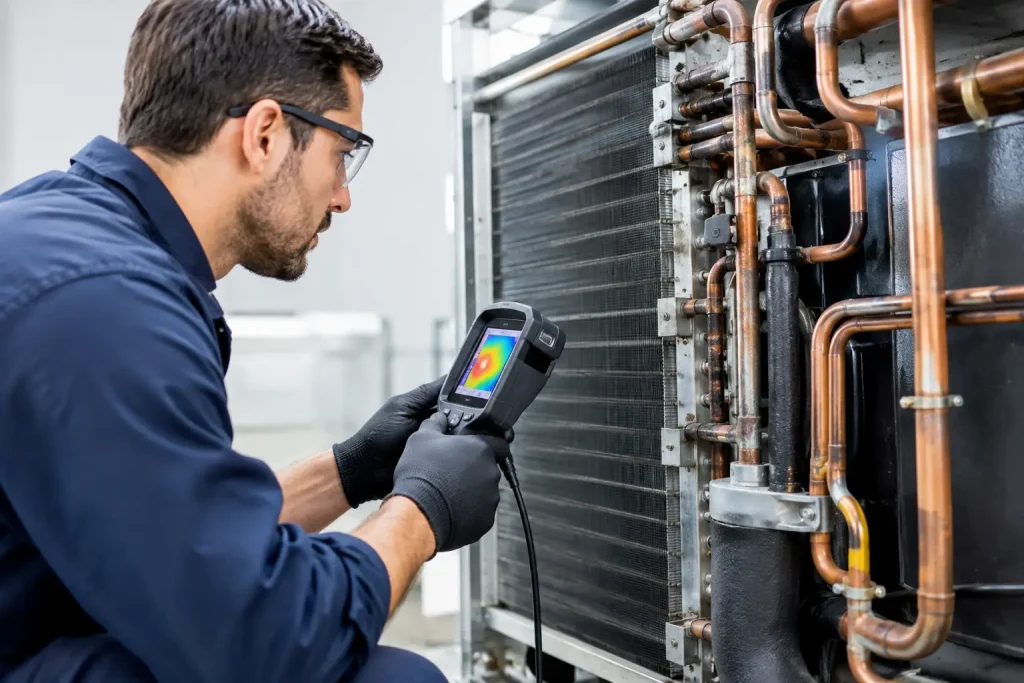
A UV-compatible dye may be used where the source remains uncertain. Added in the correct quantity and used with suitable inspection equipment, dye can show the fresh route of fluid from its origin. It is particularly useful where the rack sits behind subframes, heat shields or undertrays and direct sight lines are limited. Dye is an aid to diagnosis, not a substitute for cleaning and careful inspection.
A pressure test may also be appropriate, depending on the system and fault. This helps establish whether the hydraulic system is operating within expected parameters and can expose a leak that only occurs under load. The result must be interpreted alongside the physical evidence. High pressure alone does not automatically condemn a rack, just as a wet rack body does not automatically prove an internal failure.
Distinguishing external seepage from internal rack failure
An external seepage at a connection or seal around the pinion area may sometimes be addressed without a complete rack rebuild, depending on the rack design and the availability of correct parts. However, a leak into either gaiter generally calls for a more thorough assessment. Fluid inside the gaiter means it has passed beyond the rack’s internal sealing arrangement.
At that point, simply fitting new gaiters will not cure the cause. The gaiters protect the inner joints and rack bar from water and road debris, but they are not designed to retain power steering fluid. Leaving fluid inside them can also damage adjacent components and mask progression of the fault.
The other key distinction is between a rack that is leaking but structurally serviceable and one with damaged internal surfaces. If the rack bar is pitted or scored in the seal travel area, fitting seals alone may offer only a short-lived result. A proper reconditioning decision depends on inspection of the underlying components, not on the leak symptom in isolation.
When removal and bench assessment are needed
Some leak sources can be confirmed on the vehicle. Others cannot. Restricted access, fluid trapped within the gaiter, uncertain pinion leakage and suspected internal wear may require the rack to be removed for detailed examination.
During component-level assessment, the unit can be stripped, cleaned and inspected for wear, corrosion, damaged threads, housing condition and rack-bar surface quality. Suitable units may be rebuilt using appropriate OE or OE-quality components, then tested before leaving the workshop. Testing is valuable because it checks more than visible sealing: it helps confirm smooth operation and correct function under controlled conditions.
Not every unit is a candidate for repair. Severe corrosion, cracked housings, unavailable internal parts or damage from a previous incorrect repair can rule it out. Certain modern steering systems may also require replacement, vehicle-specific coding or calibration after installation. A realistic recommendation should explain these limits before work proceeds.
The repair does not end when the leak stops
Once a hydraulic rack has been repaired or replaced, the rest of the steering system still requires attention. The system must be filled with the correct fluid, bled correctly and checked for quiet, consistent assistance. Any contaminated components or damaged gaiters should be addressed, otherwise dirt and moisture can shorten the life of the repaired unit.
Wheel alignment is normally required after rack removal or disturbance of steering arms. On vehicles with steering-angle sensors or driver-assistance functions, calibration may also be necessary. These final checks protect handling, tyre wear and the precise steering response the driver expects.
Pro Power Steering approaches leak diagnosis as a steering-system decision rather than a quick visual judgement. For suitable racks, component-level reconditioning and workshop testing can provide a considered alternative to replacing an entire assembly, with direct technical support available to fitting garages where required.
A clean inspection, evidence under operating conditions and an honest assessment of the rack’s internal condition are what turn an apparent leak into the right repair decision. That gives the vehicle the best chance of returning to smooth, safe and predictable steering.
